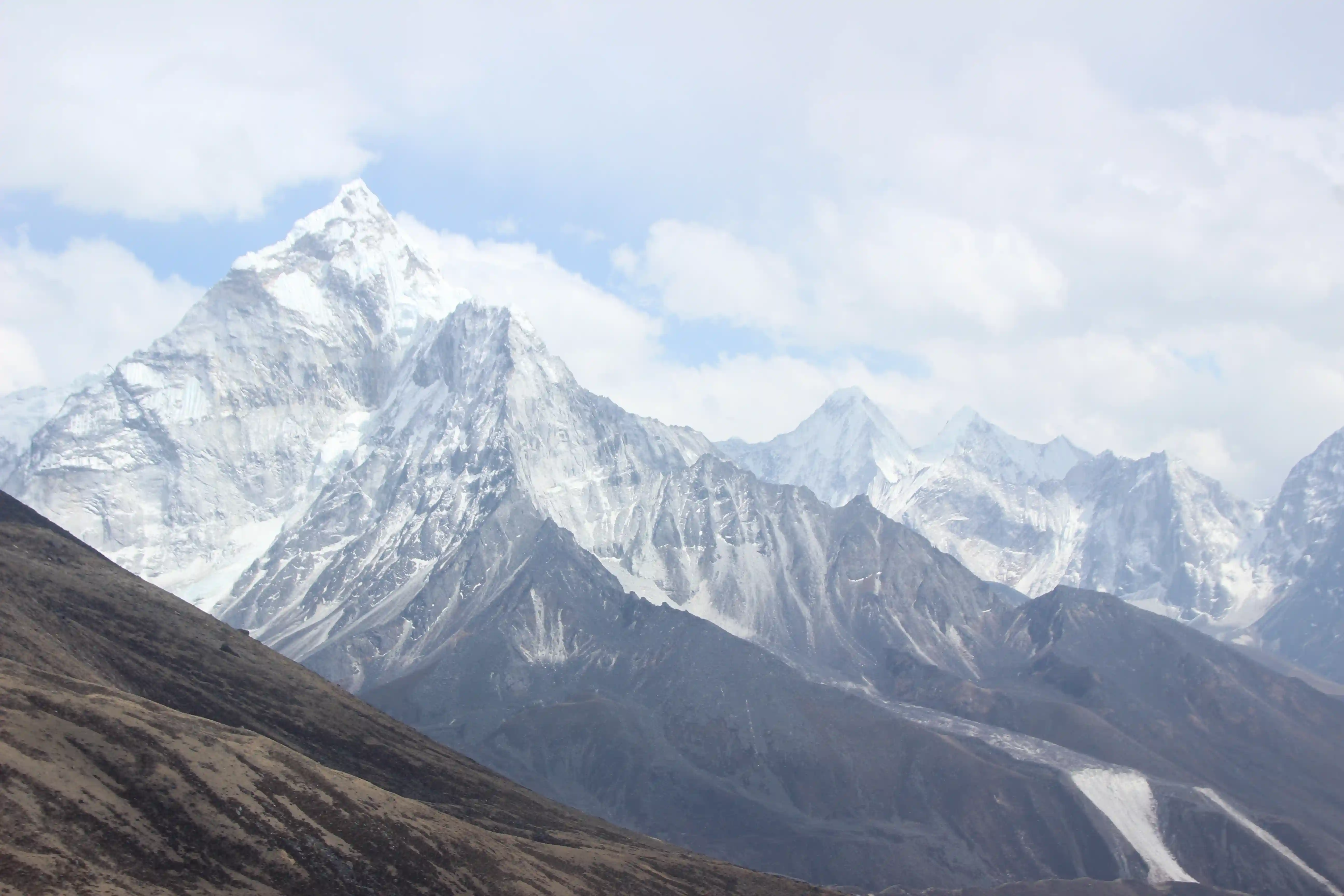
lobuche Peak with Everest

Tour Info

trip code

05

Starting Point/ End Point

Kathmandu

Accommodations

Lounge and tea house

Max Altitude

6119m

Duration

21 days

country

Nepal

Trip grade

Strenuous

Activities

Trekking

Best Season

March, April, May, September, October, November

Overview

Lobuche Peak with Everest provides a unique journey that combines an iconic trekking route with a thrilling experience of peak climbing. Everest Region Trek will take you to the traditional path towards Everest Base Camp, where you will be able to admire the colorful Sherpa villages and enjoy the majestic landscapes of the Himalayas, along with the cultural heritage of the Sherpas. The trail leads to Namche Bazaar via the Dudh Koshi River and forests of pines and rhododendron.

As you continue along Lobuche Peak with Everest towards Deboche or Dingboche with Everest Base Camp, the landscape opens up as the mountains start to dominate the distance. Acclimatization days in Namche and Dingboche will help you gradually adjust to the high altitude. The environment becomes harsher as you scale up to Lobuche and Gorakshep. Glacial moraines can be seen, and there are also wonderful views of the mountains.

Everest Base Camp will prove to be a major milestone in your life as it is standing at the base of the world’s highest peak. The Kalapattar trek can provide you with beautiful vistas of the peaks, especially at sunrise, as they are glowing in the golden sunlight.  As part of the preparation for the climb, basic mountaineering and equipment skills are taught.

High Camp is where the alpine experience begins. The summit attempt usually begins early in the morning. Lobuche Peak offers panoramic views across the Everest area. The view is breathtaking, as you are surrounded by the giants of Everest and Lhotse. The descent is the same, and you will return safely to the valley via the Khumbu.

The journey concludes with a scenic return flight from Kathmandu to Lukla. Lobuche Peak, combined with Everest Base Camp, provides a balance of adventure and achievement with breathtaking Himalayan scenery.
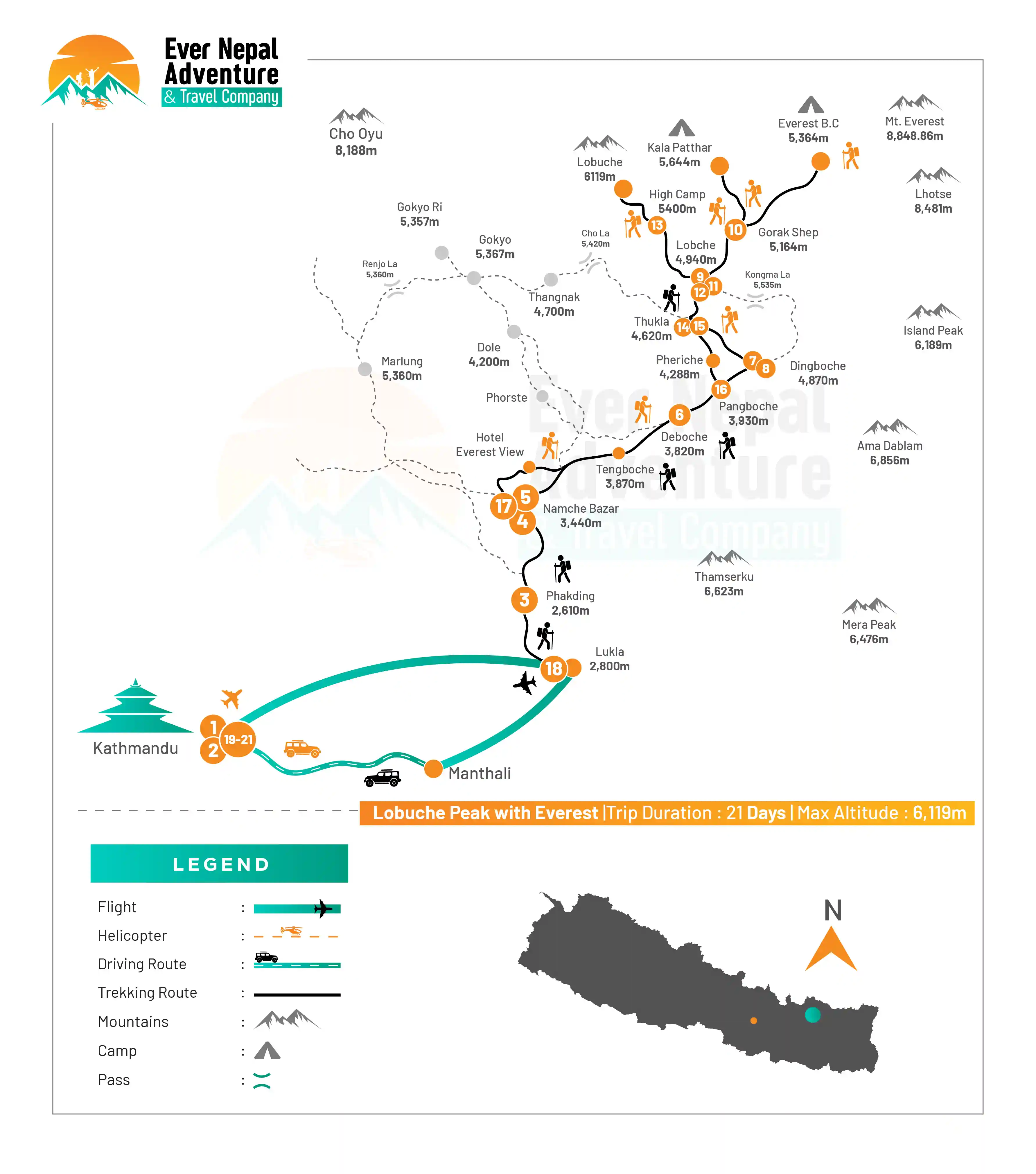
Highlights

  • Lobuche Peak Climbing in the Everest Region

  • The classic Everest Base Camp Trekking Route

  • Experience vibrant Sherpa Culture in villages like Namche Bazaar or Pangboche.

  • Experience a wide range of landscapes, from dense forests to glaciers at high altitudes.

  • Acclimatize gradually by taking well-paced hiking days

  • Experience the Khumbu Icefall at Everest Base Camp

  • Kalapattar is a great place to hike for sunrise views in the Himalayas

  • Lobuche is a great place to learn mountaineering basics before your climb

  • Lobuche Peak is the perfect place to see Everest, Lhotse or Nuptse.

  • Explore the mountain views as you descend along scenic trails.

Itinerary

Day 01: Arrive in Kathmandu

Kathmandu's vibrant energy is felt the moment you set foot in the city. Arriving at Tribhuvan International Airport, you will complete the arrival formalities and then enter a city that is full of culture, tradition, and constant activity. Our representative will greet you and transfer you to your chosen hotel, passing through streets full of temples, shops, and the everyday life of locals. You will get your first real taste of Kathmandu as you drive through streets filled with temples, shops and local life. After arriving at your hotel, take a rest or a stroll around the surrounding area. This is the perfect introduction to Nepal, as it feels warm and full of character. This day is for you to relax, recover and settle into your new surroundings.

  • Max Elevation: 1338 m

  • Travel Distance: 6 km

  • Travel Hours: 1 hour

  • Accommodation: Hotel

  • Meals Included: Dinner

Day 02: Equipment check and trek/climb preparation/Kathmandu sightseeing

Breakfast is served, after which the morning hours are yours to get ready for the trip. Your guide will check all the gear to be sure it suits the high altitude requirements. If anything essential is missing, it can be bought at Kathmandu trekking shops. Be sure that everything is organized before you proceed to the mountains. Then you will take a private vehicle and go on an escorted tour of the Kathmandu Valley.

Kathmandu Valley is packed with ancient temples and holy stupas. The temples are monuments of Nepal's spiritual and cultural history. Your guide will explain all the history to make it interesting and educational. Today you will see heritage monuments, city life and spiritual spots. You will never forget this exciting day spent preparing for your upcoming Himalayas adventure.

During this tour, you will visit various UNESCO World Heritage Sites:

  • Swayambhunath Stupa, or Monkey Temple

This Buddhist stupa is located on a hill in the valley of Kathmandu. The temple got its nickname because of the monkeys living there. The stupa offers panoramic views of Kathmandu and is a place of religious significance for both Buddhists and Hindus. The stupa has prayer flags and shrines as well as the iconic Buddha eye symbolizing wisdom and awareness.

  • Pashupatinath Temple

Pashupatinath, one of Nepal's sacred Hindu temples dedicated to Lord Shiva and located on the banks of the Bagmati River, is one of Nepal’s most important Hindu temples. The complex is characterized by traditional pagoda architecture, sacred shrines and cremation ghats that are used for Hindu rituals every day. The main temple is only accessible to Hindus. However, the surrounding area provides a spiritual and cultural experience.

  • Boudhanath

Boudhanath is one of the largest Buddhist stupas found in the world, as well as being an important center of Tibetan Buddhism in Nepal. It is one of the largest stupas of Buddhism, dating back to the 5th Century. It can be identified through its white dome, which symbolizes the eye of all-seeing Buddha. There are monasteries and shops surrounding the stupa. People move around the stupa in a clockwise fashion while offering prayers.

  • Bhaktapur Durbar Square

Bhaktapur Durbar Square is an architectural and cultural site in Nepal showcasing some of the best art and architecture of the Newari people. Formerly the seat of the Malla kings, there are many palaces, temples, courtyards, intricately crafted wooden buildings, as well as the 55-Window palace and Nyatapola temple.

You will head back to your hotel the next evening, and you will have the rest of the day at your disposal.

  • Max Elevation: 1400 m

  • Travel Distance: 10 km

  • Travel Hours: 4 hours

  • Accommodation: Hotel

  • Meals Included: Breakfast

Day 03: Fly to Lukla and trek to Phakding

After breakfast, we take a scenic flight to Lukla through Kathmandu. We get fantastic mountain scenery as far as the eye can see. The beginning of your trek begins with the landing at Lukla. From here, you will begin a gentle descent on well-defined trails. As you follow the Dudh Koshi River through mountain villages, you will cross suspension bridges decorated with prayer flags. You will pass through pine forests and open landscapes on the route, which gives you a first-hand experience of Everest. The walk is relatively short, which allows you to start adjusting your body to the altitude. Arriving at Phakding village, you can relax in this peaceful place and take in the tranquil surroundings.

  • Max Elevation: 2860 m

  • Travel Distance: 8 km

  • Travel Hours: 4 hours

  • Accommodation: Teahouse

  • Meals Included: Breakfast, Lunch, Dinner

Day 04: Trek to Namche Bazaar

The trail continues along the Dudh Koshi River and crosses suspension bridges to add excitement. As you progress, the path gradually climbs up through pine and rhododendron forests. The ascent steepens and becomes more constant after entering Sagarmatha National Park. You will see more of the landscape and, on clear days, catch your first distant glimpse of Everest. The final ascent to Namche Bazaar, while steady and rewarding, is a long one. The village looks like a natural amphitheater, surrounded by mountain ranges. Namche is a bustling trading centre in the region with a comfortable and lively atmosphere. It is an ideal spot to take some rest before scaling greater heights in the coming days.

  • Max Elevation: 3440 m

  • Travel Distance: 11 km

  • Travel Hours: 6 hours

  • Accommodation: Teahouse

  • Meals Included: Breakfast, Lunch, Dinner

Day 05: Rest and Acclimatization at Namche

The entire day would be utilized in acclimatization. It is imperative to adjust to higher altitudes. Rather than remaining at complete rest, go on short hikes to nearby vantage points, returning to Namche for an overnight stay. These hikes will help you adapt to the high altitudes, and you can enjoy breathtaking sights of Mount Everest, Lhotse, and Ama Dablam from there. This proves to be refreshing because of the open vistas and clear mountain air. In Namche, you can visit the many cafes, small shops and bakeries or relax in its lively atmosphere. Namche's combination of comfort, altitude and small shops makes it an ideal place for acclimatization. This day is important for safety and stability, before moving higher into Everest's region.

  • Max Elevation: 3880 m

  • Travel Distance: 5 km

  • Travel Hours: 3 hours

  • Accommodation: Teahouse

Day 06: Trek to Deboche

The trail leaves Namche and follows a scenic route, with views of mountains in every direction. The gentle rises and drops of the path provide a pleasant trekking rhythm. Passing through forests and small villages, you reach Tengboche. This is known for the famous monastery that sits against a dramatic Himalayan background. After a short stop, the trail descends into a peaceful forest towards Deboche. As you get further away from the more crowded sections, the atmosphere gets quieter and calmer. A day filled with cultural heritage and natural splendor is one of the most memorable days.

  • Max Elevation: 3820 m

  • Travel Distance: 11 km

  • Travel Hours: 6 hours

  • Accommodation: Teahouse

  • Meals Included: Breakfast, Lunch, Dinner

Day 07: Trek to Dingboche

As you continue to move into the Khumbu Valley, your trail will gradually begin to climb. As you move deeper into the Khumbu Valley, the landscape becomes more open with fewer and wider trees. While you continue to enjoy the views of the surrounding peaks, you will pass through small towns and cross rivers. The air gets thinner as you increase in altitude, and the terrain becomes rougher. The walking is steady, but challenging as you approach a mountainous environment. Dingboche looks like a wide valley village surrounded by stone-walled fields and dramatic Himalayan peaks. The landscape is open and peaceful, but there are strong mountain winds blowing. Dingboche provides a good acclimatization opportunity, which allows you to get used to the altitude before going higher. The atmosphere in the village is peaceful, allowing you to relax and prepare for the rest of your journey.

  • Max Elevation: 4410 m

  • Travel Distance: 12 km

  • Travel Hours: 6 hours

  • Accommodation: Teahouse

  • Meals Included: Breakfast, Lunch, Dinner

Day 08: Rest and Acclimatization day

This is the day for acclimatization. Allow your body to adjust to increasing altitude. After breakfast, a short hike will take you to nearby ridges in the area above Dingboche. The climb up is gradual but steady. As the height increases, you will see amazing views. Ama Dablam, Lhotse and the surrounding peaks are clearly visible across a wide valley. It is a vast, open landscape with a strong impression of high-altitude wildness. You will descend back to Dingboche, where you can rest after the time spent at the viewpoint. The village is quiet and surrounded by stone-walled, flat fields. It offers a peaceful atmosphere for recuperation. This day helps to reduce the altitude risk and prepares you for the more difficult sections that lie ahead.

  • Max Elevation: 5000 m

  • Travel Distance: 6 km

  • Travel Hours: 4 hours

  • Accommodation: Teahouse

  • Meals Included: Breakfast, Lunch, Dinner

Day 09: Trek to Lobuche

As you continue to ascend, the trail gets steeper. The trail passes through broad valleys with an increasing amount of rugged terrain. Dughla is the first place where you will find the steepest and most demanding trail. A memorial section for climbers gives the journey a reflective feel. After the steep hike from Thukla, the trail continues through glacial moraine with spectacular mountain scenery in all directions. The atmosphere becomes thinner as the mountains become more distant and powerful. Lobuche appears as you progress, a settlement surrounded on all sides by towering peaks. The surroundings are rugged but beautiful, marking your entry to the final approaches towards Everest Base Camp.

  • Max Elevation: 4910 m

  • Travel Distance: 8 km

  • Travel Hours: 5 hours

  • Accommodation: Teahouse

  • Meals Included: Breakfast, Lunch, Dinner

Day 10: Trek to Everest Base Camp and retrace back to Gorekshep

The day starts off with a steady hike towards Gorakshep.  On this day, the trail leads you through rocky terrain and along glacial trails. As you continue, the scenery becomes more dramatic. After a short break at Gorakshep in Nepal, you proceed towards Everest Base Camp. The altitude can make the walk challenging, but your surroundings will keep you motivated. As you approach Base Camp in the Everest area, the energy increases. Towering peaks and ice-formed formations dominate the scenery. Everest Base Camp is the most powerful moment you can have at the foothills of the world's largest mountain. Then you walk back to Gorakshep. The walk back is long and reflective. You are able to take in all the sights, sounds, and achievements once more.

  • Max Elevation: 5364 m

  • Travel Distance: 15 km

  • Travel Hours: 8 hours

  • Accommodation: Teahouse

  • Meals Included: Breakfast, Lunch, Dinner

Day 11: Hike up to Kalapattar and retrace back to Lobuche

Kalapattar is a great viewpoint in the Everest area. The ascent in cold temperatures is slow but steady. The Himalayan panorama is revealed in full as you reach its summit. Everest, Lhotse and the surrounding peaks glow golden. The view from the top is a powerful, yet quiet one. It still sticks in memory and ranks as an important part of the entire journey. After spending some time in Gorakshep, it is time for you to descend to Gorakshep and then on to Lobuche. As you drop in altitude, the descent becomes easier and more comfortable. This day blends altitude experience with some of the most iconic views in the area.

  • Max Elevation: 5545 m

  • Travel Distance: 13 km

  • Travel Hours: 7 hours

  • Accommodation: Teahouse

  • Meals Included: Breakfast, Lunch, Dinner

Day 12: Climbing Course and rest day at Lobuche

This day is all about preparing for your climb up Lobuche Peak. After breakfast, take part in basic mountaineering instruction led by experienced guides. You will be taught how to properly use equipment like ropes, harnesses and crampons. The training focuses on movement techniques that are required in snow and ice terrain. You will also learn and practice safety procedures to be used on the summit. During the day, you will rest and conserve energy. Lobuche's altitude provides the ideal learning and recovery environment. The preparation day helps to build confidence and prepare for the technical ascent ahead.

  • Max Elevation: 4910 m

  • Travel Distance: 3 km

  • Travel Hours: 3 hours

  • Accommodation: Teahouse

  • Meals Included: Breakfast, Lunch, Dinner

Day 13: Move to High Camp

The trail between Lobuche and High Camp starts with a steady climb through uneven and rocky terrain. As you progress higher in altitude, there are fewer signs of vegetation. The snow cover increases. This climb is strenuous and requires careful maneuvering, but the scenery grows more spectacular. A landscape dominated by distant mountains, glaciers and ice formations creates an atmosphere of high altitude. High Camp, located in a remote position and exposed to the elements, is surrounded on all sides by Himalayan giants. After your arrival, prepare yourself to push for the top. You spend the evening in quiet concentration, preparing for an early morning summit push.

  • Max Elevation: 5,400 m

  • Travel distance: 4km

  • Travel Hours: (4-5 hrs)

  • Accommodation: Tent/Camp

  • Included Meals: Breakfast, Lunch, Dinner

Day 14: Summit Lobuche and descend to Thukla

The summit push is done in the early morning, under dark and cold conditions. The climb involves steep snow slopes as well as rocky sections. You will need to maintain your focus throughout the entire climb. Your climbing guide supports you as you move slowly, carefully and cautiously. As you gain in height, the Himalayan mountains open up. Lobuche Peak offers panoramic views that include Everest, Lhotse, Nuptse, as well as many other peaks. After a short stay at the top, you should begin your descent. The long and tiring return journey is filled with reflection and fulfillment. Continue down to Thukla for a well-deserved rest.

  • Max Elevation: 6119 m

  • Travel Distance: 10 km

  • Travel Hours: 10 hours

  • Accommodation: Teahouse

  • Meals Included: Breakfast, Lunch, Dinner

Day 15: Extra day scheduled for any delays

This extra day is used to buffer the impact of any weather delays or scheduling changes. The extra day will help ensure safety and flexibility in case of sudden changes to the mountain conditions. This day, if all goes according to schedule, can be used as a recovery and relaxation period after the summit attempt. It gives you time to rest and recover, as well as hydrate yourself. This buffer will help to maintain a safe route and well-managed itinerary when you are at high elevations.

  • Max Elevation: 5000 m

  • Travel Distance: 2 km

  • Travel Hours: 2 hours

  • Accommodation: Teahouse

  • Meals Included: Breakfast, Lunch, Dinner

Day 16: Trek to Pangboche

As you descend, the trail becomes easier and more comfortable as oxygen levels slowly increase. As oxygen levels increase, the trail becomes more comfortable and easier. Retrace the familiar route by passing through Dingboche and then following the valley down. The terrain becomes less harsh and more lush as the landscape changes. The pace is slow and steady, which allows your body to recuperate after the summit attempt. Pangboche, one of Khumbu's oldest Sherpa settlements, is visible as you continue. It is surrounded by stunning mountain scenery and has a strong cultural influence. The village offers a tranquil environment in which you can reflect on your climb up the mountains.

  • Max Elevation: 3985 m
  • Travel Distance: 10 km

  • Travel Hours: 5 hours

  • Accommodation: Teahouse

  • Meals Included: Breakfast, Lunch, Dinner

Day 17: Trek to Namche Bazar

As you return to Namche Bazaar, the trail descends through familiar terrain. Tengboche and the surrounding forested areas are completely different from the high alpine area. Rhododendrons and pines create a totally different atmosphere. As the altitude drops, breathing becomes easier. You will be guided through the valley by suspension bridges, rivers, and hillside paths. The landscapes become greener as you progress. Namche slowly appears in its bowl-shaped location, surrounded by mountains as you approach the town. After days of climbing higher and more difficult terrain, returning to Namche is comfortable and familiar. The lively atmosphere of the town, its bakeries and shops, is a welcome contrast to those remote sections that you previously climbed.

  • Max Elevation: 3440 m

  • Travel Distance: 13 km

  • Travel Hours: 6 hours

  • Accommodation: Teahouse

  • Meals Included: Breakfast, Lunch, Dinner

Day 18: Trek to Lukla

As you return to Lukla, the final day of trekking follows the Dudh Koshi River. The trail takes you through suspension bridges, forests and small villages you have already crossed. As you walk, it is easy to reflect on your entire journey from Kathmandu up to the summit. It is more comfortable to descend slowly and comfortably, so you can enjoy the scenery. The familiar sounds of the rivers and their movement create a feeling of closure. The environment gets more lively and active as you get closer to Lukla. Your trekking and climbing adventures in the Everest Region are complete when you reach Lukla. The evening is usually spent relaxing with your team and celebrating the success of the journey.

  • Max Elevation: 2860 m

  • Travel Distance: 18 km

  • Travel Hours: 7 hours

  • Accommodation: Teahouse

  • Meals Included: Breakfast, Lunch, Dinner

Day 19: Fly back to Kathmandu

Take an early morning flight back to Kathmandu from Lukla. The scenic, short flight gives you one last look at the Himalayan range. As you near the city, the snow-covered peaks slowly fade. Once you arrive at Kathmandu, you will be transferred to your hotel, where you can rest for a while. Once you complete your trekking and climbing, you may spend the remainder of your time relaxing and exploring nearby areas or having some Nepali food at your hotel. After days of being in the remote mountains, Kathmandu's comfort is a welcome change. This is a day that marks the smooth transition back from the Himalayas to urban life.

  • Max Elevation: 1338 m

  • Travel Distance: 138 km

  • Travel Hours: 1 hour

  • Accommodation: Hotel

  • Meals Included: Breakfast

Day 20: In Kathmandu

You can explore Kathmandu at your own pace on this day of relaxation and freedom. Visit cultural heritage sites, eat local cuisine or stroll through Thamel's vibrant streets. This city is a great place to spend the last day of your trip in Nepal. It offers a blend of culture, history and comfort. This is an excellent opportunity for you to look back at the experience that you gained from visiting the region of Mount Everest and the achievement of scaling Lobuche Peak. The schedule today is totally flexible.

  • Max Elevation: 1400 m

  • Travel Distance: 8 km

  • Travel Hours: 3 hours

  • Accommodation: Hotel

  • Meals Included: Breakfast

Day 21: International departure

Today, your journey in Nepal ends. You will be taken to Tribhuvan International Airport, depending on the flight schedule. You will carry the memories you have of your trek through the Everest Region, including standing at Everest Base Camp and climbing Lobuche Peak, with you as you depart Kathmandu. This is a journey that will stay with you for a long time. It's incredibly rewarding, both physically and personally. The Himalayas will leave you with a lasting memory, making this a truly memorable adventure.

  • Max Elevation: 1338 m

  • Travel Distance: 6 km

  • Travel Hours: 1 hour

  • Meals Included: Breakfast

What's included

  • Pick-up service at the airport for international arrivals and departures

  • Private vehicle for all ground transportation per itinerary

  • Domestic flights: Kathmandu-Lukla-Kathmandu (subject to availability and weather conditions)

  • Accommodation in Kathmandu on a twin-sharing basis (hotel with breakfast included)

  • Accommodation in teahouses/lodges during the trekking period

  • Camp setup and camping during the climbing section

  • All meals (breakfasts, lunches, and dinners) as per the itinerary during the trek

  • Experienced English-speaking climbing and trekking guide

  • Number of porters required (shared basis and luggage limits as per standard guidelines).

  • Sagarmatha National Park Entry Permit and Local Area Permits

  • Lobuche Peak climbing permits and required government royalties

  • Climbing gear such as ropes and safety equipment (for group use)

  • Basic Mountaineering Training Session before Summit Attempt

  • The guide carries a first aid kit.

  • Insurance for Nepali guides and porters

  • All applicable taxes and service fees

What's excluded

  • Nepal international airfare

  • Nepal entry visa fee payable upon arrival at Tribhuvan International Airport

  • Travel insurance must include emergency evacuation and high-altitude trekking.

  • Personal trekking and climbing gear (boots, down jackets, sleeping bags, etc.).

  • Breakfast is included in the price of meals in Kathmandu.

  • Hot showers, Wi-Fi, and charging devices during trekking (available at extra cost in lodges)

  • Soft drinks, alcohol, bottled water and other personal beverages

  • Personal expenses include laundry, phone calls and snacks.

  • Gratuities for porters, guides and other support staff

  • Emergency helicopter evacuation or rescue (if needed)

  • Additional nights in Kathmandu, or on a trek, due to weather delays or personal reasons

  • Services not specifically mentioned in "Cost Includes:"

Packing List

Before undertaking the adventure of climbing the Lobuche peak, it is vital that you pack all the right gear for your safety and security. You are going to walk through the mountains at very high altitudes. Packing wisely will help you stay prepared for changing weather conditions and manage your physical demands. You'll also have more fun. This is a list of items you may want to consider packing for Lobuche Peak or Everest Base Camp.

  • Head

    • Warm insulated beanie, Buff, or neck gaiter, or a warm beanie

    • Balaclavas on Summit Day

    • Hats with wide brims or sun hats

    • Glacier sunglasses with UV protection

    • Ski goggles that protect against wind and snow

    • High-SPF sunscreen

    • Lip Balm with SPF

    • Lightweight headlamp with extra batteries

    • Facial wipes

  • Hands

    • Inner liner gloves

    • Insulated waterproof gloves

    • Gloves and mitts are recommended for heavy summits

    • Hand Warmers

  • Upper Body

    • Thermal base layers that wick moisture away

    • T-shirts that are perfect for hiking and dry quickly

    • Breathable long-sleeved hiking tops

    • Fleece jacket

    • Insulated down jacket

    • Heavy down jackets to be worn for high-altitude and summit pushes

    • A shell jacket that is windproof and waterproof

    • Lightweight puffy Jacket

    • Raincoat or Poncho

    • Sportswear for layering

  • Lower Body

    • Thermal innerwear

    • Softshell trekking pants

    • Waterproof outer shell pants

    • Insulated summit pants

    • Fleece trekking trousers

    • Comfortable camp pants

    • Warm leggings & compression layers

  • Footwear

    • Waterproof hiking boots that are durable

    • Mountaineering boots compatible with Crampons

    • Lightweight sandals, camp sandals

    • Gaiters for Snow Protection

    • Woolen trekking socks

    • Thermal Summit Socks

    • Microspikes, crampons, and other devices

  • Climbing Gear

    • Climbing harness

    • Helmet

    • Ice axe

    • Safety cords and Carabiners

    • Ascenders & descender devices

    • Crampons

    • Trekking poles

    • Mountaineering backpack

    • Duffel bag

    • Sleeping bag for extreme cold temperatures

    • Sleeping bag liner

  • Toiletries

    • Toothbrushes & toothpaste

    • Biodegradable soap

    • Quick-dry towel

    • Small shampoo bottle

    • Hand sanitizer

    • Wet wipes

    • Toilet paper

    • Cream for dry skin that moisturizes

    • Nail clipper

  • Accessories

    • Water bottles or hydration bladders

    • Filters and tablets for purifying water

    • Power banks

    • Travel adapter

    • Camera or phone

    • Memory Cards and Batteries Extra

    • Binoculars

    • Dry bags or waterproof stuffbags

    • Snacks and energy bars

    • Journal or notebook

  • First Aid Kit

    • Diamox can be used to treat altitude sickness

    • Prescription drugs for personal use

    • Ibuprofen & paracetamol are painkillers

    • Bandages and gauze

    • Blister Treatment Kit

    • Antiseptic creams, wipes, and lotions

    • Anti-diarrhea medication

    • Electrolyte packets

    • Altitude sickness medication

    • Pulse Oximeter Optional

  • Miscellaneous Items

    • Passports, travel documents, and other documents

    • Passport-sized photos

    • Personal expenses: How to spend money

    • Insurance documents

    • Maps and hiking notes

    • Lightweight books or other entertainment items

  • Special Gear for Women

The women should pack certain essentials in order to be comfortable, prepared, and protected when climbing and trekking the Lobuche Peak or the Everest Base Camp. The right gear can make this experience safer and easier, especially since the adventure includes high altitude, cold temperatures, and physically demanding days. Here are some specific gears designed for women.

  • Sports bra

  • Thermal leggings

  • Fleece headband

  • Sanitary pads and tampons

  • Personal hygiene products

  • Skincare products (moisturizers, sunscreens, cleansers)

  • Comfortable trekking tights

  • Travel-size toiletries

  • Hair care and extra hair ties

  • optional but recommended.

    • Portable solar charger

    • Oxygen canister (personal emergency use)

    • Satellite communication device

    • Thermos flasks are lightweight.

    • Protein Gels and Snacks

    • Extra Summit Gloves and Socks

Documents and Permits

In order to have an adventure on the trip to Lobuche Peak and Everest Base Camp, you will need some documents and permits. They will ensure the safety and legality of your trip. The following are the required documents and permits you will need on your journey:

  • Sagarmatha National Park Permit: This is the required permit to enter into the Everest from Sagarmatha National Park. The Nepal Tourism Board in Kathmandu, or the Monjo park entrance point, can issue this permit. For foreigners, the charges are around NPR 3,000 ($23), NPR 1,500 for SAARC nationals, and NPR 100 if you're a Nepali citizen.

  • Khumbu Area Permits: The permit is needed to enter the Khumbu area. You can get it either in Lukla or Monjo. For foreign trekkers, the permit costs between NPR 2,000 and NPR 3,500 ($15-$23).

  • Lobuche Peak Permit: Lobuche Peak has been classified by the Nepal Mountaineering Association as a trekking summit. Climbers are required to obtain an official climbing license. Permit prices vary according to the season. The cost of the spring season is approximately USD 250. The autumn season is around USD 125. And the summer/winter season costs about USD 70.

  • TIMS Card: Trekkers can also be required to have a TIMS Card for tracking and registration purposes. The card can be acquired either from the tourism offices in Kathmandu or from the trekking companies.

  • Passport: It is necessary to have a passport that remains valid for at least six months after the date of entry into Nepal.

  • Photographs: Passport-size photographs (four to six photos minimum) are needed for the purpose of making official documentation or obtaining any permit, etc.

  • Entry visa in Nepal: An entry visa to Nepal for foreigners will be acquired at the Tribhuvan International Airport in Kathmandu. The visa can also be obtained from the Embassy of Nepal prior to departure.

  • Travel Insurance: Travel insurance is compulsory when going to the peaks of Lobuche Peak and Everest Base Camp. It should cover high-altitude trekking and climbing, along with all medical expenses and trip cancellation.

  • Climbing and medical certificate (optional): Although it is not compulsory to possess any medical certificates or insurance documents while going to climb the peaks, it may prove helpful.

Frequently Asked Questions

How difficult will it be to climb Lobuche Peak from Everest Base Camp?

Lobuche Peak, Everest Base Camp, and the Lobuche Peak summit are considered challenging high-altitude treks. Summiting the peak is relatively harder compared to the Everest Base Camp because you need mountaineering skills and high fitness levels. It is essential to get ready for walking through the long hours and dealing with altitude and cold weather conditions.

Do I need to have any experience climbing the peak before attempting Lobuche Peak?

Technical experience is not necessary, but would be very helpful. You will learn basic mountaineering skills before summiting the peak. These skills entail the use of ropes and crampons. harnesses and other climbing gear. It would help if you had some experience with altitude and were very fit.

What time of year should one climb the Lobuche Peak?

It is advisable to consider the spring (March to May) and autumn periods (September to November). The weather is stable, and conditions for climbing are relatively safe at these times. Winter and monsoon periods might be considered too because of weather constraints.

How tall is Lobuche Peak?

Lobuche Peak is located at 6,119 meters (20 075 feet) above sea level. The summit of Lobuche Peak offers panoramic views that include Everest, Lhotse, Nuptse, Ama Dablam, as well as many other Himalayan peaks.

Is altitude illness a problem during this trip?

Certainly, altitude sickness is one of the most challenging aspects of this trip since the trek passes through an altitude higher than 5,000 meters above sea level before summiting. There are days allocated in between the route where you can rest in Namche Bazaar, Dingboche, and elsewhere for acclimatization to altitude. It is crucial that you follow your guide, drink plenty of fluids, and walk slowly.

What kind of accommodation is offered during the journey?

Accommodation is generally provided in mountain lodges and teahouse having reasonable accommodation facilities. Accommodation in Kathmandu will be done in a hotel on a double occupancy basis. When climbing to High Camp, tents and camp accommodations are provided.

How many meals are included while trekking and climbing?

All meals are included as part of the itinerary for both trekking and climbing journeys. This includes breakfast, lunch, and dinner. Several different varieties of both local and non-local food can be enjoyed in the teahouse. It is a breakfast-only city.

What permits are necessary for Lobuche Peak, Everest Base Camp, and Lobuche Peak?

The Nepal Mountaineering Association issues several permits to cover this journey. They include the Sagarmatha National Park permit, the Khumbu Pasang Lhamu Regional Municipality permit, and the Lobuche Peak Climbing permit. Passport, travel insurance, and passport-sized photos are required.

Is it necessary to buy travel insurance before this tour?

It is also important to purchase a travel insurance policy prior to visiting the Lobuche Peak Base Camp and the Everest Base Camp. Travel insurance should be purchased for all activities like high altitude trekking, climbing, and all kinds of treatment if needed. Also, emergency helicopter evacuation insurance should be bought, considering that weather conditions can change rapidly in the Himalayas.

What are the key moments of this trip?

The exciting aspects that come your way during your tour are high altitude trekking, a visit to the base camp of Mount Everest, visiting various Sherpa villages including Namche Bazaar and Pangboche, Khumbu ice fall crossing, and summiting Lobuche peak.

User Review