Tashi Lapcha Pass to Thame Trek (17 Days)

Tour Info

trip code

EN-46

Starting Point/ End Point

Kathmandu

Accommodations

Lodge/ Tea House

Max Altitude

5755m (Tashi Lapcha Pass)

Duration

17 days

country

Nepal

Trip grade

Easy

Activities

Trekking

Best Season

March, April, May, September, October, November

Overview

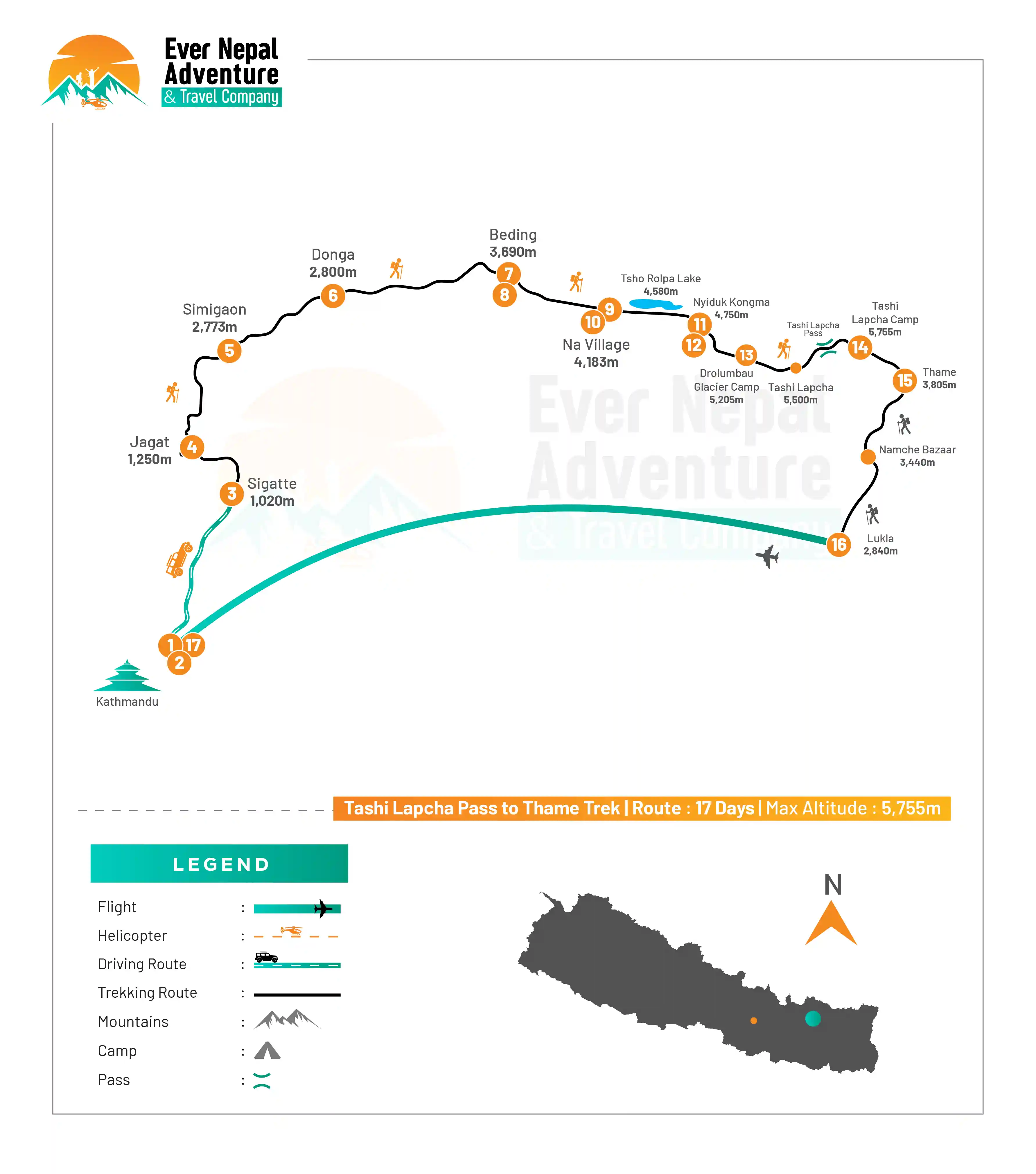
Tashi Lapcha Pass to Thame trek is an adventurous and less-traveled route in Nepal. This route connects the Rolwaling hidden Valley to the Khumbu region. The 17-day trip offers a rare mix of remote wilderness, high altitude adventure, deep cultural immersion, and a combination of both. This is not the typical trekking route. Instead, it feels raw and untouched. Every day has a sense of exploration and discovery.

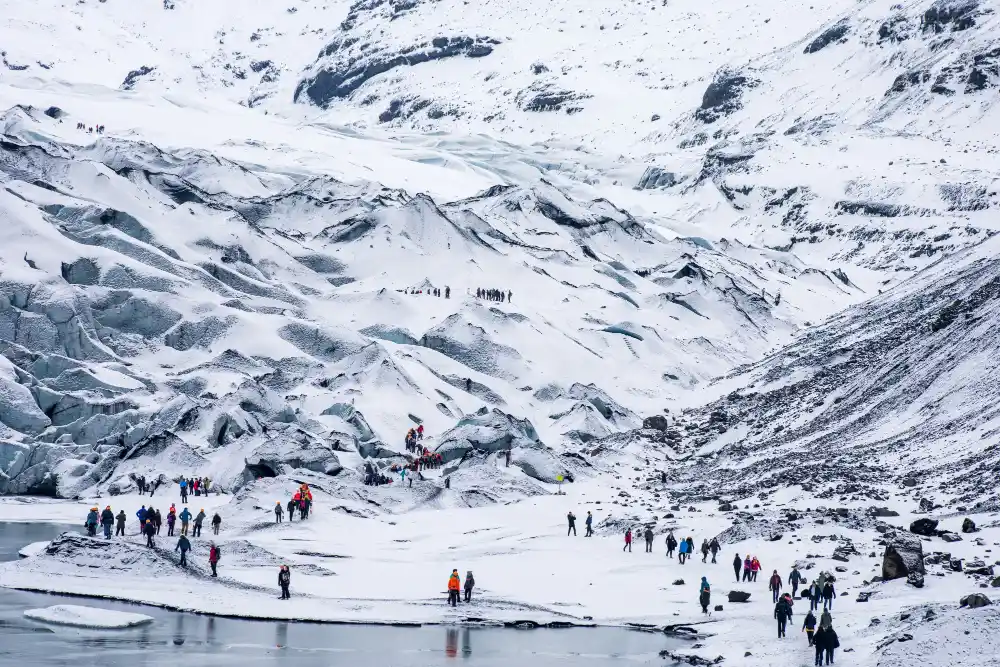
While on this trail, you'll encounter thick forests, mountain meadows, and gorges formed by glaciers. Eventually, the journey ends at an elevation of 5,755 meters at the point called Tashi Lapcha Pass. During your trip, you'll also come across some historical monasteries alongside the traditional Sherpa population and natural scenery. The combination of Rolwaling and Khumbu valleys in this area makes the trekking experience even more distinctive.

This kind of trekking adventure that blends mountaineering into it is ideal for those seeking adventure. Tashi Lapcha Pass to Thame trek can provide a real Himalayan experience to all enthusiasts.

Overview 

Tashi Lapcha Pass to Thame trek in Nepal is one of the most challenging and rewarding ways to experience the Himalayan region. This 17-day trip takes you from the Rolwaling region to the Everest region. You will experience a blend of familiarity and solitude.

However, the landscape continues to change significantly along the trek route. You can experience valley areas with rich flora, terraced farming and forest areas and later switch to high altitudes with the glaciers that cover mountains and moraines formed as a result of glaciers' movement. Hence, such a variety creates unique impressions for hikers.

On your way to Everest, you will visit some of the local settlements, such as Simigaon Beding Na. The area boasts strong local culture and traditions related to Tibetan Buddhism, as there are a lot of prayer walls, chortens and mani walls here.

The Tashi Lapcha Pass crossing is the highlight. This high-altitude cross requires careful planning and acclimatization. Sometimes, a basic mountaineering kit is required. This is the ultimate reward with its panoramic views of the Himalayan mountains and a deep sense of accomplishment.

The trail becomes familiar and lively as you descend into Khumbu. While passing through Namche Bazaar or Thame, you can experience a contrast of remote isolation with the vibrant Everest trekking culture. Tashi-Lapcha Pass Trek is an adventure that combines culture, nature, and adventure.
Highlights

  • Scenic drive between Kathmandu and Sigatte through hills, river valleys and scenic drives

  • Rolwaling Valley is a culturally rich valley in the middle of nowhere.

  • Discover traditional villages, including Simigaon Beding Na.

  • Tsho-Rolpa glacial lake is one of the most beautiful lakes in Tibet.

  • Experience glacier and high-altitude treks

  • Tashi Lapcha Pass (5,755 m)

  • Himalayan peaks, glaciers, and mountains are all visible in this panoramic view.

  • Thame is an excellent way to reach the vibrant Khumbu area.

  • Explore Namche Bazaar to reach Everest.

  • From Lukla to Kathmandu, enjoy a scenic flight through the mountains.

Itinerary

Day 1: Arrival in Kathmandu (1350m), transfer to the hotel

The journey begins at Tribhuvan International Airport, where you will be warmly welcomed and transferred to the hotel. Kathmandu comes alive as you drive through the city, with its culture, traffic, traditional architecture, and mix of cultures. After you check in, you can relax and recover from your journey.

If you arrive in the morning, you can enjoy the local streets, a cup of coffee, or just relax at your hotel. After a welcoming dinner, you'll meet your tour guide and learn about the trek. This will ensure that you are well-rested before setting out on your next trip.

  • Highest Elevation: 1350 m

  • Max Elevation: 1,350 meters (Kathmandu)

  • Travel Distance: 5 to 6 kilometers

  • Travel Hours: 20 to 30 minutes

  • Accommodation: 3-star hotel

  • Meals Included: Dinner

Day 2: Sightseeing in Kathmandu and trek preparations

The day commences with an early breakfast at your hotel, followed by a sightseeing tour of the Kathmandu Valley around 8 AM in a private car. During the whole day, there will be a professional guide with you providing useful information about each destination. You will travel slowly, exploring the rich history of the valley and getting closer to understanding the spiritual meaning of Nepal as a country.

A. Pashupatinath (World Heritage Site)

This temple is one of the oldest and holiest Hindu temples dedicated to Lord Shiva, situated on the bank of the Holy River Bagmati. The temple has an architectural style of pagoda-type structure, ghat, and numerous daily religious activities held inside it. Even though entry to the sanctuary part of the temple is prohibited for non-Hindus, you have an opportunity to explore the surroundings and watch amazing rituals performed here.

B. Boudhanath (World Heritage Site)

Boudhanath is among the biggest Buddhist monuments worldwide and a major religious center for Tibetan Buddhism in Nepal. Inside the big white stupa lies the gold-topped stupa as well as the two giant eyes belonging to Buddha, which signify enlightenment and wisdom. The place is surrounded by monks, monasteries, and prayer wheels where worshippers perform their religious ceremonies in a clockwise manner.

C. Swayambhunath Stupa /Monkey Temple(World Heritage Site)

Swayambhunath is an old hilltop stupa looking down at the Kathmandu Valley. Often referred to as Monkey Temple due to its inhabitant population, the monument features a number of colorful prayer flags, small shrines, Buddhist images, and symbols. Highly valued by both Hindu and Buddhist religions, the temple is among the most prominent spiritual sites of Nepal.

The following part of your schedule will be devoted to preparation for your upcoming trekking journey. You can use this day to talk to your trekking team about the details of the trek that is coming up, thus preparing yourself for it. You can also do last-minute shopping and settle any issues that might be bothering you at this point in time.

  • Max Elevation: 1,400 meters (Kathmandu)

  • Travel Distance: 25 to 30 kilometers

  • Travel Hours: 6 to 7 hours

  • Accommodation: 3-Star Hotel

  • Meals Included: Breakfast

Day 3: Drive Kathmandu to Sigatte (1,020m)

After breakfast, you set out on a pleasant drive to Sigatte. You will be travelling through mountains that offer terraced fields, rivers, and small villages. As you leave the city behind, your surroundings become quieter and more rural.

Driving is long and rewarding. Along the way, you will be able to enjoy changing landscapes as well as glimpses of life in the local area. After a few hours, you will arrive at Sigatte. A peaceful riverside community. You relax in your lodge with a warm meal and settle down after a day's travel.

  • Max Elevation: 1,020 meters (Sigatte)

  • Travel Duration: 8 to 10 hours

  • Accommodation: Tea house/lodge

  • Meals Included: Breakfast, Lunch and Dinner

Day 4: Trek from Sigatte to Jagat (1,250m)

Start your trek with a leisurely walk along a river. The trail winds through forest, terraced fields, and small towns. Suspension Bridges and flowing brooks add to the charm.

The pace is relaxed, which allows you to get used to the rhythm. You get to see the locals and their homes. After a couple of hours, you reach Jagat - a small settlement in the hills where you spend the night.

  • Max Elevation: 1,250 meters (Jagat)

  • Travel Duration: 5 to 6 hours

  • Accommodation: Tea house/lodge

  • Meals Included: Breakfast, Lunch and Dinner

Day 5: Trek from Jagat to Simigaon (2,060 m- 2,773 m).

As you continue towards Simigaon, the trail will begin to ascend steadily. As you travel, the route offers scenic views of forests, terraced farms, and traditional villages. More ascents are obvious, yet the surroundings ensure that the trip is fun.

The higher up you go, the fresher the air and space become. You will be greeted by an amazing sight at Simigaon, where the majestic mountains will leave you in awe. Sit back and enjoy the scenic surroundings before tackling another ascent.

  • Max Elevation: 2,773 meters (Simigaon)

  • Travel Duration: 6 to 7 hours

  • Accommodation: Tea house/lodge

  • Meals Included: Breakfast, Lunch and Dinner

Day 6: Trek from Simigaon to Donga/Kyalche (~2,800m)

Continue your journey through dense forest and uphill trails. The trail winds through shadowy forests, passes through creeks, and features tight spots to provide variation. The farther one ventures down the valley, the more it seems that the setting becomes wilder.

The hiking path is of moderate difficulty with a few uphill climbs and level stretches. After a few hours, you will reach Donga or Kyalche. This is a peaceful resting place surrounded by nature. Enjoy a peaceful evening in your lodge.

  • Max Elevation: ~2,800 meters (Donga/Kyalche)

  • Travel Duration: 5 to 6 hour

  • Accommodation: Tea house/lodge

  • Meals Included: Breakfast, Lunch and Dinner

Day 7: Trek from Donga/Kyalche to Beding (3,690m)

As you move into the alpine zone, the landscape changes. The valley becomes wider and more open, with expansive views of the surrounding peaks. The trail is rocky and has open scenery. It follows the river.

Beding is a main village in the Rolwaling valley. You can explore the village upon arrival and learn about local culture, which is influenced by Tibetan tradition. The tranquil environment and the mountain backdrop make for a memorable night.

  • Max Elevation: 3,690 meters (Beding)

  • Travel Duration: 5 to 6 hours

  • Accommodation: Tea house/lodge

  • Meals Included: Breakfast, Lunch and Dinner

Day 8: Acclimatization at Beding (side trip to Malung Kharka)

This day will be used to acclimatize your body to the high altitude. Aftuer breakfast, you can take a short walk to nearby areas, such as Malung Kharka. This is a leisurely hike that will allow you to get used to the thinner atmosphere. Interact with the local people, explore the monasteries, and experience Beding. You can enjoy the landscape and relax at your own pace. It is essential to prepare for the higher altitudes.

  • Max Elevation: 3,690 meters (Beding)

  • Accommodation: Tea house/lodge

  • Meals Included: Breakfast, Lunch and Dinner

Day 9: Trek from Beding to Na (4,183m)

After leaving Beding, you will follow the gradual trail towards Na. The scenery becomes open and rugged, with large valleys and alpine terrain dominating. The climb is gradual but not too steep. Na is a seasonal settlement that locals use for grazing. This serene and remote destination provides an incomparable high-altitude experience. Once you reach here, you can take time to unwind and appreciate the serene environment.

  • Max Elevation: 4,183 meters (Na)
  • Travel Duration: 4 to 5 hours
  • Accommodation: Tea house/lodge
  • Meals Included: Breakfast, Lunch and Dinner 

Day 10: Acclimatization at Na (side trip / Yalung La area)

You can condition your body for the high altitude zones through acclimatization. You begin by taking a short walk to nearby viewpoints or the Yalung La region. Glaciers and surrounding peaks provide a glimpse of what is to come. You return to the lodge after the hike and rest. This will prepare you mentally and physically for your next stage.

  • Max Elevation: 4,183 meters (Na)

  • Accommodation: Tea house/lodge

  • Meals Included: Breakfast, Lunch and Dinner

Day 11: Hike from Na to Tsho Rolpa Lake and then to Nyiduk Kongma (Approximately 4,750 meters)

Your trek will commence from Na on your way towards Tsho Rolpa Lake, which happens to be one of Nepal's largest glacial lakes. This hike will see you traverse through rocky and icy landscapes. The scenery around you will comprise vast expanses of wilderness with glaciers and snow-capped peaks forming the major landmarks.

After arriving at the lake, take a few minutes to admire the lake's crystal clear waters set against the backdrop of snow-capped peaks. The tranquility of the moment may make you feel like you are walking into another world. After some time, your hike continues to Nyiduk Kongma, traversing through the rough terrain. You will reach your destination after a long day of trekking.

  • Max Elevation: ~4,750 meters (Nyiduk Kongma)

  • Travel Duration: 6 to 7 hours

  • Accommodation: Camp/Basic lodge

  • Meals Included: Breakfast, Lunch and Dinner

Day 12: Contingency / Acclimatization Day at Nyiduk Kongma

The day can be flexible in order to accommodate acclimatization and weather changes. Rest is essential at this altitude. This extra time would assist your body in adjusting before venturing into rough terrain. Walking regularly is recommended so that you do not succumb to exhaustion. Your guide may even have this extra day to make preparations as well as evaluate weather conditions before tackling the next segment of the glacier. This day will be used to check equipment, drink fluids, and prepare your mind for what lies ahead. With each step closer to the pass, there comes anticipation for what lies ahead.

  • Accommodation: Camp/Basic lodge

  • Meals Included: Breakfast, Lunch and Dinner

Day 13: Trek to Drolumbau Glacier Camp (5,205m)

You will now be moving onto more technical terrain. After breakfast, you will carefully navigate over rocky moraines and uneven terrain. This day is both exciting and challenging because the trail requires attention and steady movements.

As you make your ascent, you will notice that the scenery is becoming more spectacular. The terrain is filled with huge chunks of ice, and the mountain is covered in snow.  Once you reach the Drolumbau Glacier Camp and settle in to rest, prepare your gear, and get ready for the pass crossing. This experience is truly memorable because of the sense of isolation and the raw beauty.

  • Max Elevation: 5,205 meters (Drolumbau Glacier Camp)

  • Travel Duration: 5 to 6 hours

  • Accommodation: Camp

  • Meals Included: Breakfast, Lunch and Dinner

Day 14: Cross Tashi Lapcha Pass (5,755m) and descend to camp

It is also the most rewarding and challenging day. Early morning starts, usually before sunrise, to make the most of the weather. With the proper equipment, you ascend slowly toward Tashi Lapcha Pass, traversing snowfields and glacial sections. Achieving the summit is an incredible achievement. The pass offers a panoramic view of the Himalayan mountains, glaciers and endless ridgelines. It is a powerful moment, but also humbling. After a few minutes at the top, you begin your careful descent towards safer camping. The descent is difficult, but the feeling of accomplishment will help you get through the day.

  • Max Elevation: 5,755 meters (Tashi Lapcha Pass)

  • Travel Duration: 8 to 10 hours

  • Accommodation: Camp

  • Meals Included: Breakfast, Lunch and Dinner

Day 15: Trek to Thame (3.805m).

As you descend further into the Khumbu, the trek becomes more relaxed. The trail gradually changes from the rough terrain of the glaciers to more stable trails, and greenery slowly returns to the landscape. As you continue to descend, you start to notice more signs of settlements. The trekking area gets more familiar. Welcome to the Sherpa Village that boasts of cultural wealth and peace. You can sit back and enjoy hot food, contemplating the amazing journey you have just undertaken.

  • Max Elevation: 3,805 meters (Thame)

  • Travel Duration: 6 to 7 hours

  • Accommodation: Tea house/lodge

  • Meals Included: Breakfast, Lunch and Dinner

Day 16: Trek from Thame to Namche Bazaar (3,440m) and then to Lukla (2,840m)

It is a long but fulfilling day as you continue descending through the Khumbu Region. The trail will take you through picturesque landscapes. It includes suspension bridges as well as small villages. The route towards Namche Bazaar has a lively feel compared to the isolated Rolwaling Valley. You continue your journey towards Lukla after a short stop at Namche. The trail has both gentle climbs and descents to keep the day interesting. When you reach Lukla and mark the end of your trekking journey, a feeling of accomplishment will settle in. The evening is a time to relax, enjoy and celebrate your last night in the mountains.

  • Max Elevation: 3,440 meters (Namche Bazaar)

  • Travel Duration: 7 to 8 hours

  • Accommodation: Tea house/lodge

  • Meals Included: Breakfast, Lunch and Dinner

Day 17: Fly from Lukla to Kathmandu and departure

After a leisurely breakfast, you will head to the Airport for your scenic return flight to Kathmandu. This will be your last chance to see the mountains, the rivers, and the valleys.

Either you may check into your hotel in Kathmandu or prepare yourself for further travel. You may choose to relax, do some shopping, or even reflect upon this whole expedition that you have done. You conclude your expedition by recalling the mountains, the valleys, and above all, the experience of conquering Tashi Lapcha Pass.

  • Max Elevation: 1,350 meters (Kathmandu)

  • Flight Duration: 30 minutes

  • Meals Included: Breakfast

What's included

  • Airport pick-up and drop-off in a private vehicle

  • 2 nights’ accommodation in a 3-star hotel in Kathmandu with breakfast

  • Welcome and farewell dinner in Kathmandu

  • All necessary trekking permits, including the Rolwaling Valley permit and the Everest region permits

  • Licensed and experienced trekking guide

  • Necessary number of porters (1 porter for 2 trekkers), including their salary, insurance, food, and accommodation

  • Domestic flight from Lukla to Kathmandu

  • All ground transportation as per itinerary (Kathmandu to Sigatte by private vehicle)

  • Accommodation in tea houses/lodges during the trek

  • Camping arrangement with full support (tents, kitchen equipment, staff) during high camp and glacier sections

  • Three meals a day (Breakfast, Lunch, and Dinner) during the trek

  • Seasonal fruits, tea/coffee during meals

  • All required trekking and basic climbing equipment for pass crossing (ropes, crampons, ice axe if needed)

  • First aid medical kit carried by the guide

  • Government taxes and service charges

What's excluded

  • International airfare to and from Nepal

  • Nepal entry visa fees

  • Travel insurance (must cover high-altitude trekking and emergency evacuation)

  • Personal trekking gear (down jacket, sleeping bag, boots, etc.)

  • Extra night accommodation in Kathmandu due to early arrival, late departure, or flight delays

  • Lunch and dinner in Kathmandu (except welcome and farewell dinners)

  • Personal expenses such as laundry, phone calls, internet, hot showers, and battery charging during the trek

  • Alcoholic and non-alcoholic beverages, bottled water, and snacks

  • Tips for guide, porter, and support staff

  • Emergency rescue and evacuation costs (in case of unforeseen situations)

  • Any additional costs due to itinerary changes, weather conditions, or natural causes

Packing List for the Tashi Lapcha Pass to Thame Trek

Proper packing for your Tashi Lapcha La pass to Thame trek is very crucial since it helps you to feel safe and adequately prepared for your whole journey. Moreover, proper packing of your trek enables you to enjoy your trek and be able to adapt to the harsh conditions of high altitude. Some of the gears you should pack for the Tashi Lapcha Pass to Thame trek are listed below: 

Head

  • UV-protected sunglasses

  • Neck gaiter

  • Warm beanie

  • Lightweight headlamp

  • Facial wipes

  • Lip balm

  • Wide-brimmed sun hat

  • High-SPF sunscreen

  • Lip balm

Hands

  • Insulated gloves

  • Waterproof gloves

Upper Body

  • Waterproof and windproof outer jacket

  • Fleece jacket and insulated down jacket

  • Quick-drying t-shirts

  • Warm base layers

  • Breathable long-sleeved trekking shirt

  • Raincoat

  • Light, compressible puffy jacket

  • Four pairs of moisture

Lower Body

  • Full-length trekking pants

  • Comfortable cotton pants

  • Insulated pants

  • Two sets of fleece or trekking trousers

  • Warm thermal innerwear

Footwear 

  • Gaiters

  • Lightweight sandals

  • Four pairs of moisture-wicking wool

  • Durable, waterproof hiking boots

Toiletries

  • Soap

  • Hand sanitizer

  • Toilet paper

  • Toothbrush and small toothpaste

  • Small shampoo bottle

  • Quick-dry towel

Accessories

  • Water bottle

  • Camera or phone

  • Binoculars

  • Travel adapter

  • Power banks

  • Lightweight trekking poles

  • Large duffle bag

  • Small backpack or daypack

  • Water purification method

First Aid Kit

  • Antiseptic wipes

  • Bandages

  • Personal prescriptions

  • Anti-diarrhea medication

  • Painkillers (ibuprofen)

  • Blister care

  • Diamox

Specific Gears for Women

Some gears are required, especially for women who are going for the Tashi Lapcha Pass to Thame trek. These gears help very much to ensure comfort, proper fit, and better protection in high-altitude places. Some of the essential gears for women include: 

  • Sports bra

  • Fleece Headband

  • Undergarments

  • Skincare items (moisturizer, skin cleanser, and sunscreen)

  • Tight Leggings

  • Travel-size shampoo

  • Sanitary pads

  • Tampons

Required Document

You need various documents to successfully complete the Tashi Lapcha Pass to Thame trek journey. Carrying the necessary documents ensures that you have a smooth journey without encountering problems regarding permits during your trek. Some of the documents that you need include:

  • Rolwaling Restricted Area Permit (RAP): It is a very necessary document which you should get for this journey. This pass ensures safety and cultural preservation. You can get this permit from the Department of immigration, Maitighar, Kathmandu. The required cost per person for this permit is USD 20 per week.  

  • Gaurishankar Conservation Area Permit (GCAP): GCAP is also a mandatory permit that is required for trekking in the Gaurishankar Conservation Area. The price for this permit is roughly NPR 3,000 (about $30), which applies to foreign citizens, and the permits are obtained from the Nepal Tourism Board located in Kathmandu.

  • Sagarmatha National Park Permit: This permit is compulsory for the Tashi Lapcha pass to Thame trek. Its price is approximately NPR 3,000 (US$21-30). The permit is obtained either from the Nepal Tourism Board located in Kathmandu or at the Monjo park entrance checkpoint.

  • Khumbu Pasang Lhamu Rural Municipality Permit: The Khumbu Pasang Lhamu Municipality permit is required for all trekkers entering the Khumbu region. The cost for this permit is approximately NPR 2,000 (about $ 15 to $20). You can acquire this permit from Lukla or Monjo.

  • Passport: The original passport together with the photocopy is necessary and should have a validity of at least six months after your travel period.

  • Passport Size Photos: At least 4 to 6 passport-size photos are required. 

  • Travel Insurance: This insurance is compulsory for providing you emergency rescue and treatment in case of illness up to an elevation of 6,000 meters.

  • Visa: A Nepal Tourist visa is essential for this trek. 

Frequently Asked Questions

How difficult is the Tashi Lapcha Pass Trek?

The Tashi Lapcha pass trek is considered a challenging trek. This trek is hard because you need to cross the glacier, potential crevasses, and steep ice/rock terrain. Additionally, you also need climbing gear, including fixed ropes, to cross the pass. 

Is prior trekking experience required?

Yes, prior trekking experience is highly recommended, as you need to trek at very high elevations and need to perform technical climbing. 

Do I need a guide for this trek?

Yes, hiring the guide as well porter is mandatory for the Tashi Lapcha pass to Thame trek. They are required in order to make your trek easier, faster, and more efficient. 

What is the accommodation like on this trek?

The accommodation you can find here at Tashi Lapcha passes to Thame trek ranges from basic teahouses in lower Rolwaling villages to full-service tented camping in high-altitude, remote areas.

Can I get altitude sickness?

Yes, altitude sickness can happen at the height of 5,755m (Tashi Lapcha pass). To prevent such altitude sickness, you need to stay hydrated, ascend slowly, walk steadily, and take short rest along the way.

When is the best time for this trek?

The best period to go on the Tashi Lapcha pass to Thame trek journey is during autumn (September to November) and spring (March to May). During these months, there are favorable weather conditions, clear sky, moderate temperature, and beautiful views of the surrounding mountains.

How physically fit should trekkers be?

For this Tashi Lapcha Pass to Thame trek, it is necessary that you possess very high stamina and good cardio fitness level. You need to trek for long hours every day (6 to 8 hours). Additionally, you also need to trek over rocky terrain, steep ascents, and glaciers while carrying a daypack. 

What happens if weather conditions prevent crossing the pass?

If the weather condition prevents crossing the pass, you, along with our representatives, halt, retreat to a safe place, and wait for the weather to clear. As soon as the weather gets clear, you and our team will cross the pass. 

User Review