Mera Peak Expedition – 18 Days in Everest Region

Tour Info

trip code

01

Starting Point/ End Point

Kathmandu

Accommodations

Lounge and tea house

Max Altitude

6,461

Duration

18 days

country

Nepal

Trip grade

Strenuous

Activities

Climbing

Best Season

February, March, April, May, June, September, October, November

Overview

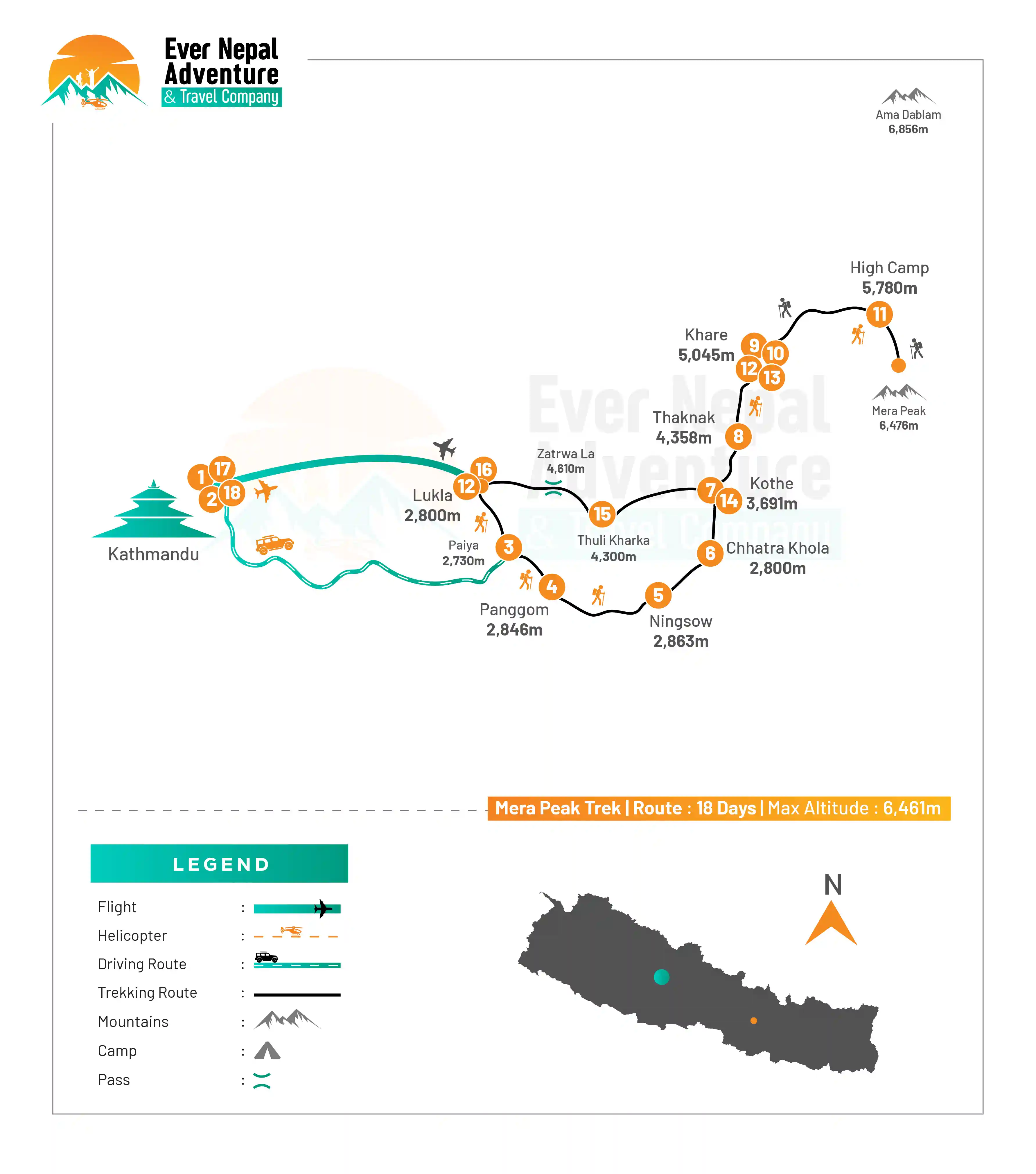
Mera Peak Expedition combines trekking and peak climbing in a quieter part of the Everest region. The journey begins in Kathmandu with cultural sightseeing and preparation before a scenic flight to Lukla. This trail from Lukla passes through Paiya to Panggom to Ningsow through forests of bamboo, rhododendron, and other plants. From there, you continue on towards Chhatra Khola or Kothe to enter the Makalu Barun National Park. Here, the terrain becomes rugged and less populated.
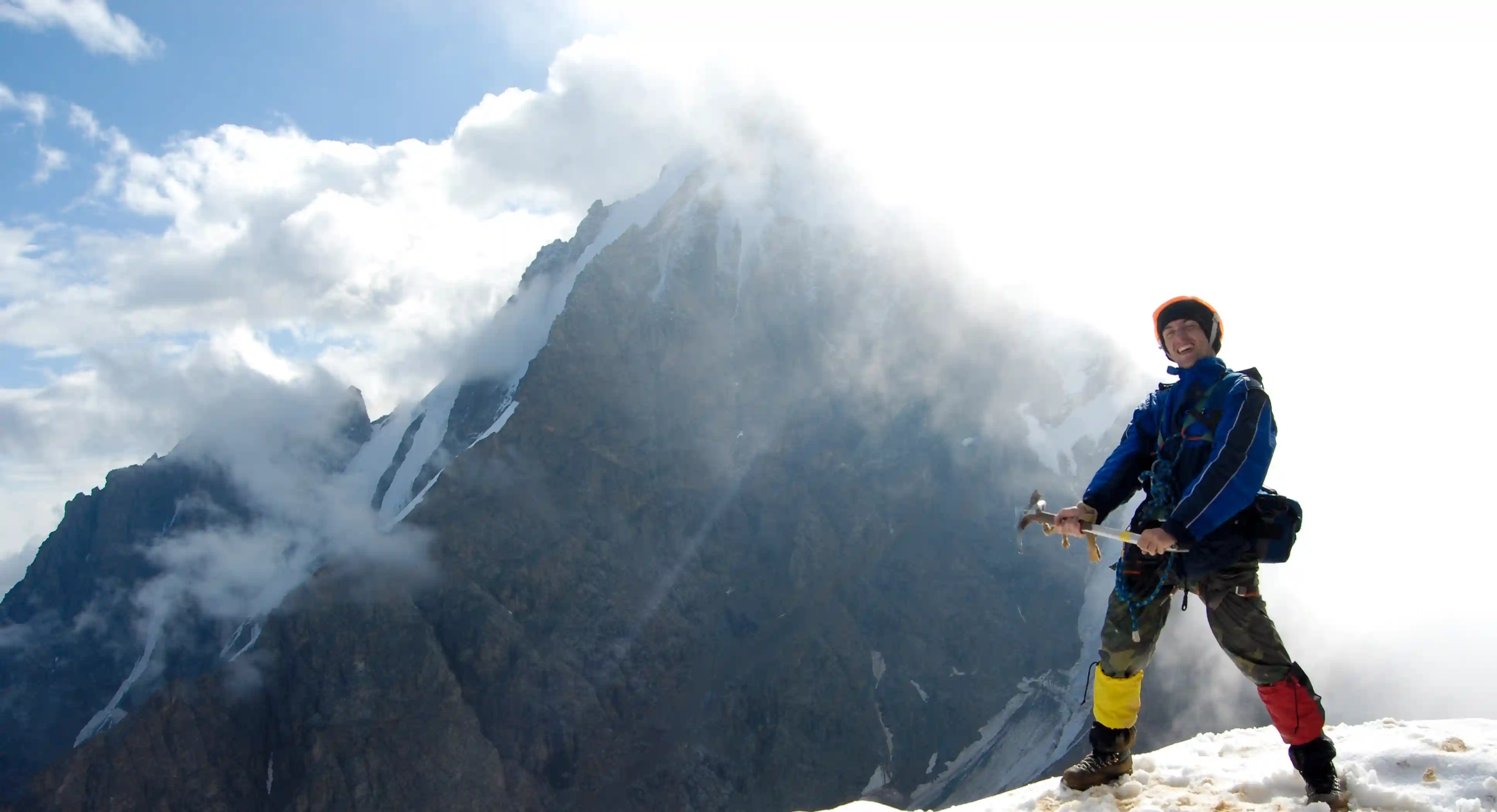
While on Mera Peak Expedition you'll be in high-altitude territory with glaciers and morainic terrain on the trek from Kothe to Thaknak and Khare. Khare is where you prepare for your climb and acclimatize. The climb up to high camp, and then the summit of Mera, is not technical but physically challenging. You will enjoy the wide-ranging views of the Himalayan giants.
After the summit, the route of Mera Peak Expedition descends through the Hinku Valley before crossing the Zwatra La Pass and reaching Lukla. Concluding with a flight back to Kathmandu. This tour involves a combination of culture, trekking, and high-altitude mountaineering.

Highlights

  • Fly over the beautiful landscape of the Himalayas from Kathmandu to Lukla
  • Culture tour of Kathmandu by visiting Swayambhunath Stupa, Pashupatinath Temple, and Boudhanath Stupa
  • Trekking around Hinku Valley trails that are relatively quieter than other places
  • Traveling in varying terrain, including dense forest and glaciers
  • A clean and well-conserved Makalu Barun National Park visit
  • Experience a traditional Nepali mountain lifestyle in villages such as Paiya Panggom Kothe
  • Khare is an excellent site for training and acclimatizing
  • View the Himalayas from the Ascent – Mera High Camp
  • Summit of Mera Peak – the highest trekking peak in Nepal
  • Everest (Lhotse), Makalu, Cho Oyu, Kanchenjunga
  • The scenic Zwatra La Pass will be crossed during the onward journey

Itinerary

Day 01: Arrival in Kathmandu and pre-trekking preparation

Kathmandu welcomes with its culture and energy that are woven into the everyday lives of locals. When you arrive at Tribhuvan International Airport in Kathmandu, the city comes alive with local rhythms, temples and movement. You will be transferred to your accommodation through busy streets. Ancient shrines stand alongside modern shops. There is a mix of chaos and charm.

Resting and recuperating after your trip is what you do for the rest of the morning. As you walk through your neighborhood, prayer flags line the narrow alleys. There are small courtyards as well. And the incense scent is wafting through the air. You will be briefed by your guide about the expedition in the evening. He will go over preparations and expectations. A welcome dinner will end the day and ease you into your adventure.

  • Accommodation: 3 Star standard Hotel 

  • Maximum Altitude: 1,350m/4,429ft

  • Meal: Dinner

Day 02: Kathmandu valley sightseeing tour

After breakfast, a professional guide will accompany you in your own vehicle on a sightseeing tour. A day of exploring the cultural and historical highlights of Kathmandu Valley is planned, allowing you to get a closer connection with Nepal’s heritage.

Swayambhunath stupa - The Monkey Temple.

The hilltop is located on the west side of Thamel with a view over the Kathmandu Valley. The complex is made of both Hindu shrines and Buddhist Stupas. This shows the religious harmony found in Nepal. Swayambhunath, also known by the name Samhengu, is affectionately called Monkey Temple owing to the large numbers of monkeys that freely roam around the area. From the top of the hill, you will have a wonderful view of the city.

Pashupatinath, Temple of the World Heritage Site:

Pashupatinath Temple was built in honor of Lord Shiva and is considered one of the holiest Hindu pilgrimage sites. The temple lies on the banks of the Bagmati River, in the very heart of Kathmandu. The temple complex has ancient shrines along with statues and holy scriptures. It is constructed in a traditional pagoda design. The temple complex is visually stunning, thanks to its architecture.

Boudhanath Stupa

Boudhanath Saintupa, an ancient Buddhist monument constructed in the 5th century, is believed to be over 2,500 years old. It is one of the largest in Nepal. The iconic eyes of Lord Buddha, facing in all directions, are featured on the stupa. These eyes symbolise wisdom and consciousness. The stupa represents a major Buddhist site of pilgrimage. Buddhist devotees, especially from Tibet, spin prayer wheels while walking around them in a peaceful meditative rhythm.

Bhaktapur Durbar Square

Bhaktapur Durbar Square consists of a royal complex that dates back to King Bhupatindra Malla's time during the Malla dynasty. Located in Bhaktapur, this district is renowned as a place of well-preserved Newari architecture. The square boasts impressive structures such as the Nyatapole Temple. Golden Gate. Bhairava Temple and Vatsala Temple. The area as a whole is a stunning example of ancient craft and cultural heritage.

Thamel

Thamel offers a variety of shops, markets and local stores. The area is brimming with vibrant streets, local shops and markets. Visit small shops, cafes and handcrafted items to enjoy a relaxed evening before starting your Himalayan adventure.

  • Accommodation: 3 star standard Hotel 

  • Travel Duration: 5-6 hour

  • Maximum Altitude: 1,350m/4,429ft

  • Meal: Breakfast

Day 03: Flight to Lukla and trek to Paiya

The day begins at dawn with a picturesque flight to Lukla. You can take this flight either from Kathmandu directly, or from Manthali domestic airport which is around 4-5 hour drive away from Kathmandu. At Lukla, you will see mountains rising slowly below your feet. Tenzing-Hillary Airport offers spectacular views during the short flight. The transition from city environment to mountain environment occurs instantly, and the air feels crisp.

From Lukla, the trail descends along forested paths. It crosses streams and suspensions. Surke is one of the small settlements that you will pass through before climbing to Paiya. The path runs through calm, lush vegetation to help you get into the swing of walking. When you reach Paiya, you'll be in an environment that feels isolated and tranquil, signaling the real beginning of your trip.

  • Flight: 40 min

  • Hiking: 5-6 hrs

  • Maximum Altitude: 2,800m/9,187ft

  • Accommodation: Hotel/Tea House (Hotel/Teahouse)

  • Meals: Breakfast, Lunch and Dinner

Day 04: Trek from Paiya to Panggom

The trail begins on a steep descent before gradually ascending along narrow mountain pathways. The route runs through dense rhododendron, bamboo, and other forest types. Nature's sounds are replaced by the noises from the city. The terrain, at times, can feel rugged. This adds a feeling of adventure.

As you cross over the Karila Pass, the landscape opens up and offers views of distant valleys. The road continues towards Panggom. It is a small village with a peaceful atmosphere where farming and trade are the mainstays of daily life. The environment is authentic and simple, allowing for a greater connection to the region.

  • Hiking:  5-6 hrs

  • Maximum Altitude: 2,846m/9,338ft

  • Accommodation: Hotel/Tea House (Hotel/Teahouse) 

  • Meals: Breakfast, Lunch and Dinner

Day 05: Trek from Panggom to Ningsow

As you leave Panggom for the day, you begin with a gradual climb before crossing Panggom La Pass. The path winds along ridgelines in forested areas with occasional clearings revealing glimpses of the nearby hills. The region gets more isolated as you continue to walk. Ningsow appears more remote as the road to it is less populated. Ningsow is a village which is tucked away in the hills. This peaceful location offers a relaxing and calm stop.

  • Hiking: 4-5 hrs

  • Maximum Altitude: 2,863m/9,394ft

  • Accommodation: Hotel/Tea House (Hotel/Teahouse) 

  • Meals: Breakfast, Lunch and Dinner

Day 06: Trek from Ningsow to Chhatra Khola

The trail begins to ascend steadily and then drops down before rising up again towards Ramailo Danda. At this vantage point, the first views of distant mountains begin to appear. The terrain begins to change as the mix of forest and ridges becomes more varied. As you continue on, you will find yourself in the unspoiled environment of Makalu Barun National Park. The Pasang Lhamu path, which is also called the Pasang Lhamu, leads through dense forest. This area is rich in biodiversity but becomes increasingly isolated once you reach Chhatra Khola.

  • Hiking: 7-8 hrs

  • Maximum Altitude: 2,800m/9,187ft

  • Accommodation: Hotel/Tea House (Hotel/Teahouse)

  • Meals: Breakfast, Lunch and Dinner

Day 07: Trek from Chhatra Khola to Kothe

The trail leads you north along the riverbanks, deeper into Hinku Valley. The path merges into the main route that leads to Mera Peak. It runs along flowing streams. Along the route, small seasonal settlements add life to an otherwise remote landscape. As you walk along the Hinku Khola valley, the landscape opens up. As you approach Kothe and the surrounding area, it is easy to notice that the terrain has changed from forest to alpine.

  • Hiking: 6-7 hrs

  • Maximum Altitude: 3,691m/12,110ft

  • Accommodation: Hotel/Tea House (Hotel/Teahouse)

  • Meals: Breakfast, Lunch and Dinner

Day 08: Trek from Kothe to Thaknak

Mera Peak slowly begins to appear as you continue along the Hinku Khola. Herders use these seasonal settlements and grazing areas to spend their time in the warmer months. You can take in the landscape as you hike at your own pace. On the way, you will come across Lungsumgba Gompa. This ancient site has inscriptions relating to Mera Peak. The journey continues on to Thaknak. This little town is situated amidst the mountains, and the air is very dry.

  • Hiking: 3-4 hrs

  • Maximum Altitude: 4,358m/14,299ft

  • Accommodation: Hotel/Tea House (Hotel/Teahouse) 

  • Meals: Breakfast, Lunch and Dinner

Day 09: Trek from Thaknak to Khare

The hike starts from Thaknak and gradually leads you into a rugged alpine landscape shaped by glacier moraines. The trail feels rough underfoot as you walk through rocky terrain mixed with patches of ice and loose debris. With every step upward, the environment becomes more open and remote, and the sense of altitude starts to grow stronger.

As you continue, the scenery becomes increasingly dramatic, with snow-covered peaks and glacial formations dominating the horizon. The northern face of Mera Peak slowly comes into full view, standing massive against the sky as you approach Khare. Reaching Khare, the setting feels high, cold and isolated. Surrounded by towering mountains, it marks an important stage in the journey where the focus naturally shifts from trekking to preparing for the climb ahead.

  • Hiking: 2-3 hrs

  • Maximum Altitude: 5,045m/16,553ft

  • Accommodation: Hotel/Tea House (Hotel/Teahouse)

  • Meals: Breakfast, Lunch and Dinner

Day 10: Acclimatization and pre-climb training at Khare

This day is dedicated to acclimatization and preparation for the climb. As you acclimatize yourself to the height, you can keep yourself busy through short treks around the region. You move at a slower pace to give time for your body to adapt. Your instructor introduces you to all the necessary gear that one needs for mountaineering. Gradually, as you feel confident, you learn to use the crampons, harnesses, and ice axes. You feel relaxed but also purposeful as you prepare for the climb ahead.

  • Maximum Altitude: 5,045m/16,553ft

  • Accommodation: Hotel/Tea House (Hotel/Teahouse) 

  • Meals: Breakfast, Lunch and Dinner

Day 11: Trek from Khare to Mera High Camp

From Khare High Camp, the climb marks the transition to true alpine conditions. The trail starts on rocky terrain, then gradually progresses to glacier sections where you need to be careful. As you climb higher, the environment becomes more exposed. Snow patches and icy sections are more frequent. The scenery will open up before you as you ascend. The Himalayan landscape is filled with much to see. On the journey towards Mera High Camp, the trekking team will see mountains and tranquility. As dusk comes, the team prepares to ascend the mountain and rest early.

  • Climbing: 6-7 hrs

  • Maximum Altitude: 5,780m/18,964ft

  • Accommodation: Hotel/Tea House (Hotel/Teahouse) 

  • Meals: Breakfast, Lunch and Dinner

Day 12: Summit Mera Peak and descend to Khare

The summit attempt starts when dawn breaks in the midst of coldness and darkness. While ascending along the glacier, the trekking route is lit up using headlamps. The surroundings will slowly become illuminated as the dawn light breaks into view. As one ascends, it takes great effort physically due to the increasing elevation. The summit of Mera Peak is a very fulfilling experience. The panoramic views include Everest, Lhotse and Makalu, as well as other Himalayan giants. After spending some time at the summit, you descend carefully back to Khare. This is one of the most important days of your expedition.

  • Climbing: 8-9 hrs

  • Maximum Altitude: 6,461m/21,199ft

  • Accommodation: Hotel/Tea House (Hotel/Teahouse) 

  • Meals: Breakfast, Lunch and Dinner

Day 13: Reserve day for contingency

This extra day is reserved to allow for unpredictability in mountain conditions. This extra day allows you to be flexible and safe during your summit attempt. This allows for the expedition to be flexible and not feel the pressure of a strict schedule. The day is a great opportunity to relax and recuperate at altitude if you have already reached the summit. Spend time in Khare exploring the glaciers and peaks around you at a more leisurely pace. This is how you get to rest after climbing and move on to the stage of descending.

  • Maximum Altitude: 5,045m/16,553ft

  • Accommodation: Hotel/Tea House (Hotel/Teahouse) 

  • Meals: Breakfast, Lunch and Dinner

Day 14: Trek from Khare to Kothe

While descending, you will follow the same route that you climbed. The air during your descent will be thicker. The glacier landscapes gradually give way to rocky pathways and then to greener surroundings. The familiarity with the trail will give you a new perspective as you head towards Kothe. The ascent is now more manageable, and you can enjoy the journey in a relaxed manner. At the end of your stay at high altitude, you should be at home in Kothe. The environment is much warmer, and there is a more friendly atmosphere.

  • Hiking: 4-5 hrs

  • Maximum Altitude: 3,691m/12,110f

  • Accommodation: Hotel/Tea House (Hotel/Teahouse

  • Meals: Breakfast, Lunch and Dinner

Day 15: Trek from Kothe to Thuli Kharka

Starting point Kothe, the hike starts on an ascent that goes through thick forests and across streams. There are fewer people trekking, and the environment is more peaceful. As you climb, the forest opens out into a wider landscape. As you continue towards Thuli Kharka, you pass chortens as well as open ridgelines. This area is a peaceful and expansive place with expansive views. It's a great stop for a day of hiking through mixed terrain.

  • Hiking: 5-6 hr

  • Maximum Altitude: 4,300m/14,108f

  • Accommodation: Hotel/Tea House (Hotel/Teahouse)

  • Meals: Breakfast, Lunch and Dinner

Day 16: Trek from Thuli Kharka to Lukla via Zwatra La Pass

Ascend the Zwatra La Pass to reach the summit, which is the last high point of the day. As you climb steadily, you will be rewarded with a wide view of the surrounding mountains and valleys. The high Himalayan scenery is said to be farewell. The trail descends slowly towards Lukla on familiar paths. As you near the village, the change in altitude will bring warmer air and increased vegetation. The trekking part is completed when you reach Lukla. You can celebrate your journey and relax with the crew.

  • Hiking: 6-7 hrs

  • Maximum Altitude: 4,600m/15,093ft

  • Accommodation: Hotel/Tea House (Hotel/Teahouse)

  • Meals: Breakfast, Lunch and Dinner

Day 17: Fly back to Kathmandu

A flight in the early morning will take you back to Kathmandu and give you one final aerial view of those mountains that you just explored. The peaks that blend with the horizon symbolize the sense of fulfillment. You can relax, shop in the local markets, or explore the city. The contrast between the serene mountains and the lively streets begins to manifest. A farewell dinner is made ready for that night in honor of the successful expedition and all the good memories you’ve forged.

  • Flight: 40 min

  • Maximum Altitude: 1,350m/4,429ft

  • Accommodation: Hotel (3 star level)

Day 18: Final departure

Your departure marks the end of your adventure. You will think back on the exciting journeys of trekking through lonely valleys and conquering mountain peaks. As you travel back to the airport, you will recall the adventures of the Himalayas. This concludes an incredible and rewarding adventure.

  • Meals: Breakfast and Dinner

Day 18: Final departure

Your departure marks the end of your adventure. You will think back on the exciting journeys of trekking through lonely valleys and conquering mountain peaks. As you travel back to the airport, you will recall the adventures of the Himalayas. This concludes an incredible and rewarding adventure.

  • Meals: Breakfast and Dinner

What's included

  • Pick-up at the airport and drop-off in Kathmandu
  • Hotel accommodation of 3-star standard in Kathmandu with breakfast
  • Kathmandu guided sightseeing according to the itinerary.
  • Domestic flights (Kathmandu-Lukla-Kathmandu) or drive to Manthali if required
  • Accommodation in teahouses/lodges on the trek
  • During trekking and climbing periods, you can have three meals per day.
  • Trekking and climbing guide with experience
  • Number of porters required (including their accommodation, food and insurance).
  • Mera Peak permit and all required government permit
  • Makalu Barun National Park Entry Permit and TIMS Card
  • Complete mountaineering training in Khare
  • Group climbing equipment (ropes, ice screws, etc.)
  • Guides carry a first aid kit.
  • All local and government taxes
  • After a successful expedition, a farewell dinner is held in Kathmandu.

What's excluded

  • Nepal international airfare
  • The Nepal entry visa fee is payable at the airport upon arrival.
  • Travel insurance must cover emergency evacuation and high-altitude trekking.
  • Personal trekking and climbing gear (boots, jackets, sleeping bags, etc.).
  • Personal expenses (WiFi, hot showers and charging, snacks and drinks, etc.).
  • Alcoholic beverages, soft drinks
  • If required, emergency helicopter evacuation must be covered under insurance.
  • Additional nights in Kathmandu for early arrivals, late departures or delays
  • Gratuities for porters, guides and staff are expected but not compulsory.
  • Services not specifically mentioned in the list

Mera Peak Expedition Packing List

The preparation for the Mera Peak Expedition will be a crucial part of your journey. The Mera Peak Expedition takes you through glacier terrain and high mountain passes in extreme alpine environments. Carrying the right equipment will help you to stay warm and comfortable during the climb. Packing correctly will also help you deal with changing temperatures, strong winds, snowfall, and long trekking days. The following is a suggested packing list for the Mera Peak Expedition.

  • Head

    • Wide-brimmed sun hat

    • Warm woolen beanie

    • Face mask or Balaclava

    • UV-protected sunglasses

    • High-SPF sunscreen

    • Lip Balm

    • Extra batteries included in the lightweight headlamp

    • Neck gaiter, or a buff

    • Facial wipes

    • Sun cap

  • Hands

    • Waterproof gloves

    • Insulated gloves

    • Inner fleece gloves

    • Hand Warmers

  • Upper Body

    • Thermal base layers

    • T-shirts that wick away moisture are ideal for trekking.

    • Long-sleeved hiking shirts that are breathable

    • Fleece jacket

    • Insulated down jacket

    • A shell jacket that is waterproof and windproof

    • Lightweight puffy Jacket

    • Raincoat or Poncho

  • Lower Body

    • Thermal innerwear

    • Insulated trekking pants

    • Waterproof trekking pants

    • Fleece trekking pants

    • Comfortable camp pants

    • Quick-drying hiking trousers

  • Footwear

    • Mountaineering boots that are durable

    • Waterproof hiking boots

    • Lightweight sandals and camp shoes

    • Gaiters

    • Warm woolen socks

    • Moisture-wicking trekking socks

    • Boots compatible with microspikes or crampons

  • Toiletries

    • Toothbrushes and toothpaste

    • Biodegradable soap

    • Quick-dry towel

    • Hand sanitizer

    • Wet wipes

    • Toilet paper

    • Small shampoo bottle

    • Moisturizer

    • Nail cutter

  • Accessories

    • Sleeping bag for extreme cold temperatures

    • Duffel bag

    • Small daypack or backpack

    • Trekking poles

    • Hydration bladders or water bottles

    • Filters or tablets for water purification

    • Dry bags

    • Power banks

    • Travel adapter

    • Camera or phone

    • Extra batteries

    • Snacks, energy bars, and snacks

  • Climbing Equipment

    • Climbing harness

    • Crampons

    • Ice axe

    • Helmet

    • Carabiners

    • Ascenders and descender devices

    • Climbing ropes (usually provided with group gear)

    • Headlamp for summit pushing

  • First Aid Kit

    • Diamox

    • Painkillers: Ibuprofen and paracetamol

    • Antiseptic cream

    • Bandages

    • Blister treatment

    • Anti-diarrhea medication

    • Altitude sickness medication

    • Prescription medicines for personal use

    • Packets of ORS

  • Miscellaneous Items

    • Passport copies

    • Passport-size photos

    • Travel insurance documents

    • Journal or notebook

    • Binoculars

    • Snacks & chocolates

    • Thermos flasks are lightweight.

  • Special Gear for Women

These items are essential for women who trek and climb on the Mera Peak Expedition, particularly during long days of hiking and climbing. These items will make you feel confident and comfortable throughout your expedition. These are gears specifically designed for women.

  • Underwear

  • Sports bra

  • Thermal leggings

  • Sanitary pads

  • Tampons

  • Travel Size Shampoo

  • Skincare products: moisturisers, sunscreens, cleansers

  • Fleece headband

  • Hair ties

  • Lip moisturizer

  • Tight leggings

Documents

Climbers and trekkers need to have certain travel documents and permits in order to be able to complete a Mera Peak Expedition safely and successfully. These permits are required to trek in the Everest Region and climb Mera Peak. Correct documentation is important to ensure safety and emergency assistance on the expedition. The following are the documents required for the Mera Peak Expedition.

  • Makalu Barun National Park Permit: This permit is required for expeditions that require you to enter the protected Makalu Barun National Park. You can get the permit from Nepal Tourism Board, Kathmandu. The permit fee is approximately NPR 3,500 (approximately $23) for SAARC nationals, NPR 1,500 (approximately $12) for Nepalese, and NPR 100 for foreigners.

  • Khumbu Region permit. The local authorities can issue the permit at Lukla or Monjo. The permit is NPR 2,000 to NPR 3,500 for foreigners ($15 - $25).

  • Mera Peak Climbing Permit: In order to summit Mera Peak, you will need a climbing permit from the Nepal Mountaineering Association. Costs vary depending on the season and can be anywhere between USD 70 and USD 250 for an individual.

  • TIMS card: This card keeps track of the safety records of trekkers in Nepal, and also provides information on trekking. The trekking agencies in Kathmandu are usually the ones who arrange it. The fee for foreign trekkers is about NPR 2,000 ($15).

  • Passport: Mera Peak Expedition requires that you have a passport with at least six months' validity from the date of your entry into Nepal.

  • Bring passport-sized photographs: You'll need four passport-sized pictures for documents such as permits, climbing documents, and other official registrations.

  • Travel insurance: The insurance must cover climbing and high-altitude trekking as well as medical treatment, helicopter evacuations, and rescue services.

Frequently Asked Questions

How difficult is the Mera Peak Expedition?

Mera Peak Expedition can be a physically challenging trekking and climbing trip due to its high altitude. The climbing section may not be technically challenging, but the altitude of over 6,000 meters makes it difficult. Mera Peak expedition adventure requires good physical fitness and endurance.

Do I need any mountaineering experience to climb Mera Peak?

The Mera Peak Expedition doesn't need any prior experience in mountaineering, but it will definitely help. Mountaineering guides give you basic training for climbing at Khare prior to your summit attempt. They train you on rope work and using crampons and harnesses. Climbing to Mera Peak is glacier hiking. No technical mountaineering skill is needed. Under guidance from professionals, first-timers with fitness and trekking experience can easily accomplish this climb.

When is the best time for the Mera Peak Expedition?

It is advised that you take the Mera Peak Expedition either in spring (March to May) or in autumn (September to November). Weather remains fairly favorable with clear views of the mountains during this period. Spring provides you with rhododendron blooms and mild weather, while autumn gives clear skies and good visibility. Winter and monsoon periods will make your journey a bit hard because of heavy snowing and rainfall.

What mountains can I see from the summit of Mera Peak?

Mera Peak is the highest trekking peak of Nepal, at 6,461 meters. Climbers will be able to see panoramic views of the highest mountains in the world from the summit. Clear weather allows climbers to see peaks such as Mount Everest and Lhotse. Sunrise views from the summit are one of the best Himalayan experiences.

Is altitude sickness a threat during my trip?

It should be noted that altitude sickness can be a potential threat because the highest point of the Mera Peak Expedition is over 6,000 meters. In case the body cannot acclimatize properly, there might be symptoms like nausea, headache, vertigo, and shortness of breath. To avoid this problem, the schedule involves a few days to acclimatize and ascend slowly. Drinking enough water, moving carefully, and following the advice of the guide are very important.

How will I be accommodated during the trekking?

The accommodation mostly includes teahouses and lodges, situated in the valleys at lower or middle altitudes. However, some accommodations might not be luxurious since the environment at high altitudes, such as Mera High Camp, is rather harsh. Nevertheless, trekkers will have a chance to spend a night at 3-star hotels before and after their expedition.

Is there a charging station and an internet service on the trail?

In several villages, there are charging facilities and limited internet service. As the expedition ascends in altitude, the internet connection becomes weaker, and charging can be more expensive. It is highly recommended to have spare batteries and power banks because the electricity may not be available at all times. Communication services can be temporarily unavailable during bad weather conditions or in remote areas.

How physically prepared am I required to be before taking part in the expedition?

For one to take part in any expedition, they must exercise their cardio, strength, and endurance. One's stamina can be increased through practices like stair climbing, running, and cycling. Physical fitness is critical because the expedition requires that you trek for many days at a great height. You are required to prepare yourself physically at least two or three months prior to the expedition.

What is included in the meals during the Mera Peak Expedition?

Three meals are included in the expedition during the trekking and climbing period. The meals are usually rice, noodles, soup, potatoes, vegetables, eggs, bread, pasta, tea, and Nepali dishes like dal bhat. The menus are more limited at higher altitudes because it is hard to transport supplies into remote mountain areas. Although the menus are limited, they are still nutritious and are designed to give energy to trekkers and climbers

Is it required to buy travel insurance for the Mera Peak Expedition?

Travel insurance should be bought during the Mera Peak Expedition due to the hazards associated with trekking at high altitudes. Ensure that your travel insurance covers rescue by helicopter, emergency medical assistance, and rescue from high altitudes. Weather conditions or accidents may arise at high altitudes that would require immediate rescue from there. Travel insurance would help in such circumstances. 

User Review