Mera Peak And Return Via Helicopter From Khare

Tour Info

trip code

EN-43

Starting Point/ End Point

Kathmandu

Accommodations

Lodge/ Tea House

Max Altitude

6461m (Mera Peak Summit)

Duration

13 days

country

Nepal

Trip grade

Easy

Activities

Trekking , Climbing , Helicopter Tour

Best Season

March, April, May, September, October, November

Overview

Mera Peak and return via helicopter from Khare is a high-altitude adventure that offers the best rewards in Nepal. This journey combines a remote trek, steady acclimatization and a nontechnical Himalayan top with the comforts of a scenic return by helicopter. You will be taken deep into the Hinku Valley away from busy Everest trails. Here, you can experience the raw alpine landscapes of the mountains and the towering peaks.

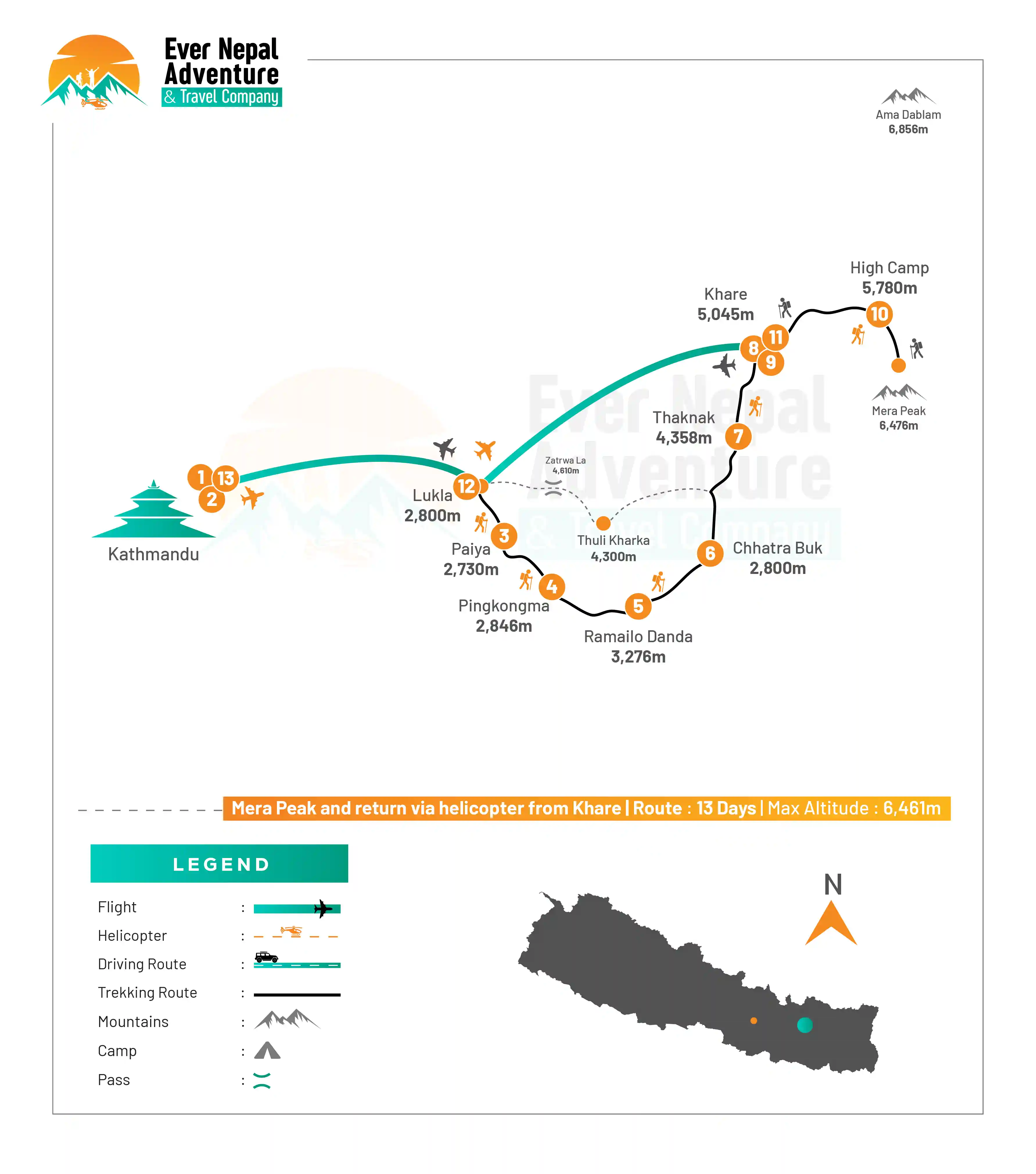
This 12-day journey starts with a flight from Kathmandu to Lukla.Mera Peak and return via helicopter from Khare then continues through Paiya Pangkonma Ramailo Danda. From there, the route gradually ascends through forests and along ridgelines to the Hinku Valley. The trail then continues through Thaknak & Khare, where the climbers prepare themselves for the ascent. After reaching the summit of Mera Peak, you will take a helicopter back to Lukla before returning to Kathmandu.

Details

Mera Peak and return via helicopter from Khare, offers a journey that seamlessly combines trekking and peak climbing. The trail in the Everest Region is quieter and avoids the busy main routes. This allows trekkers to enjoy solitude, dramatic mountain landscapes and authentic mountain life. The journey starts after a scenic flight from Kathmandu to Lukla. From here, the trail descends, then slowly ascends through Paiya forests, filled with rhododendrons, bamboo and pines. This leads to Pangkonma.

As you continue on Mera Peak and return via helicopter from Khare towards Ramailo Danda or Chhatra Buk, the terrain becomes rougher and more remote. The forest slowly gives way to a more alpine setting as you enter Hinku Valley. The high-altitude landscapes of the Thaknak-Khare trek will introduce you to high-altitude landscapes with glaciers and snow-covered peaks dominating the horizon. Khare is a base for acclimatization as well as pre-climbing, so you're prepared for the ascent.

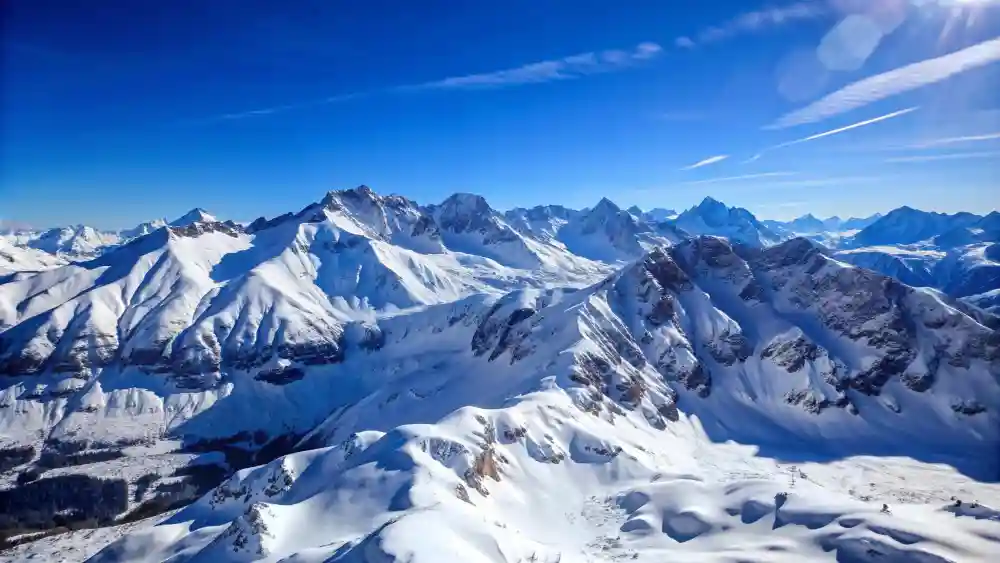
The Mera High Camp is where your efforts pay off, and you can have a great experience while reaching there. Summit attempts usually take place from here. It is indeed a grand event when the summit of Mera Peak is achieved. When at the summit of the peak, the panoramic vistas of some of the world's highest peaks unfold before you. Mera Peak and return via helicopter from Khare is really an unforgettable experience. Later, it is turned into a comfortable journey by way of a helicopter ride over the landscape.

The journey finishes with a helicopter ride to Lukla, followed by a short flight to Kathmandu. Mera Peak, with a helicopter return, offers an ideal balance for those looking for adventure and efficiency as well as unforgettable Himalayan sights.
Highlights

  • Experience the iconic Mera Peak climbing in the Everest area
  • Explore the Hinku Valley in a more relaxed manner.
  • Enjoy a variety of landscapes, including lush forests and alpine ice glaciers
  • Explore the authentic culture of the mountains, including isolated villages
  • Acclimatize gently with a hiking route at a good pace
  • Summit Mera Peak and experience one of Nepal's highest trekking peaks
  • Take in the panoramic views of Everest, Lhotse, Makalu and Kanchenjunga
  • Khare offers basic mountaineering courses before the climb
  • Experience a comfortable return with a scenic heli-flight from Khare
  • As you head back, take in the breathtaking aerial view of the Himalayas

Itinerary

Day 1: Arrival in Kathmandu

Kathmandu will welcome you with its energy, culture and sense of history, all woven seamlessly into daily life. The transition is immediate as you enter the airport from the usual routine of traveling into the Himalayan setting. After you have completed the airport arrival, you are taken to your hotel by a street full of shops, temples, and local activity. The city is vibrant and alive, but also grounded in traditional values.

You will have the rest of the morning to relax, recover and settle down. Take a quick walk around your neighborhood. Prayer flags are hung above the narrow lanes. The scent of incense is wafting through the air. An evening briefing will prepare you for your adventure, giving insight into your trek and climb. You will begin the journey in a relaxed and calm manner, before you start your climb.

  • Max Elevation: 1,300m

  • Travel Distance: 7 km

  • Travel Hours: 25 minutes

  • Accommodation: 3-star hotel

  • Meals Included: Dinner

Day 2: Kathmandu Sightseeing and Preparation

Kathmandu, the city before the trek begins, offers a rich cultural experience. Your full-day guided sightseeing takes you to some of the most important landmarks while also helping you prepare for the journey ahead. During the day, you will visit several iconic sites that reflect the spiritual and historical depth of Nepal.

Pashupatinath Temple

A sacred Hindu temple located along the Bagmati River, where daily rituals, ceremonies, and cremation rites take place in a deeply spiritual setting.

Boudhanath Stupa

One of the largest Buddhist stupas, known for its peaceful atmosphere, spinning prayer wheels, and importance as a pilgrimage site.

Swayambhunath Stupa

Also known as the Monkey Temple, this hilltop site offers panoramic views of the valley along with strong cultural and religious significance.

Kathmandu Durbar Square

A historic palace complex filled with temples and traditional architecture that showcases Nepal’s royal heritage.

  • Max Elevation: 1,400m

  • Travel Distance: 12 km

  • Travel Hours: 5–6 hours

  • Accommodation: 3-star hotel

  • Meals Included: Breakfast

Day 3: Fly to Lukla, trek to Paiya (Chutok) (2,730m/8,956ft)

The day begins early in the morning with a Lukla flight. This is the most scenic, thrilling, and breathtaking Himalayan air route. As the plane moves through the mountains, the scale of the terrain is apparent. As soon as you land, your trek begins. The path will take you quickly away from the airport's busy streets and onto quieter roads.

Paiya's route takes you through traditional villages, forested areas, and a variety of other landscapes. The air smells fresh, and natural sounds replace city noises. A variety of sensations can be experienced by walking over suspension bridges, uphill trails and streams. Paiya slowly appears in the mountains, and it is a restful, peaceful place to spend the evening. The trail begins with a stunning scenic day. It then takes you to the mountain ranges.

  • Max Elevation: 2,730m

  • Travel Distance: 9 km

  • Travel Hours: 5–6 hours

  • Accommodation: Teahouse/Lodge

  • Meals Included: Breakfast, Lunch, Dinner

Day 4: Trek from Paiya to Pingkongma (2,846m/9,337ft)

As you move towards Pingkongma on the trail, you will pass through a mix of forest and small towns. The pace is steady, and the ascents are gradual. The surrounding area becomes increasingly remote as you stroll. You can see less traffic and more of the natural world.

The trail winds through sections where it is shady, and the air is cool. Some trees can even be pushed aside so that distant hills and mountains are visible. Small streams cross the trail, adding sound and movement. Pingkongma has a stunning, picturesque location. As you continue to explore lesser-travelled areas, your day concludes with a sense of progress.

  • Max Elevation: 2,846m
  • Travel Distance: 10 km
  • Travel Hours: 5–6 hours
  • Accommodation: Teahouse/Lodge
  • Meals Included: Breakfast, Lunch, Dinner

Day 5: Pangkonma to Ramailo Danda ( (3,276m / 10,748ft)

On  this day, the hike to Ramailo Danda is a gradual climb up through forests, ridges and mountains. The trail is quieter, more remote and feels further away from villages. You can settle into a comfortable hiking pace because the ascents are consistent. As you rise, the forest opens in some places and offers glimpses of distant mountains. The air is cooler, and you can feel the ruggedness of the landscape. Ramailo Danda lives up to its title, with beautiful views and a serene setting. After a day spent in steady exertion, the landscape begins to hint towards higher altitudes.

  • Max Elevation: 3,276m

  • Travel Distance: 9 km

  • Travel Hours: 5–6 hours

  • Accommodation: Teahouse/Lodge

  • Meals Included: Breakfast, Lunch, Dinner

Day 6: Ramailo Danda to Chhatra Buk (2,800m/9,186ft)

The sixth day marks a tougher journey as you make your way to ChhatraBuk. It is a longer path that has both ascending and descending paths through forests and non-forests. The diverse landscape makes the trip exciting and gives you something different to see each time.

While walking, you become aware of your surroundings. It feels like you are going somewhere not many have been to before, with plenty of open spaces and nature around you. When you are out in the open, you can see distant hills and mountain ranges. ChhatraBuk, a place to relax after a long drive, is the destination for today. 

  • Max Elevation: 2,800m

  • Travel Distance: 13 km

  • Travel Hours: 7–8 hours

  • Accommodation: Teahouse/Lodge

  • Meals Included: Breakfast, Lunch, Dinner

Day 7: Chhatra Buk To Thaknak (4,358m/14,297ft)

As you climb higher, the day will mark a significant shift. The trail steadily climbs as the terrain shifts from being heavily forested to an open and rough terrain. The terrain becomes more mountainous, while the number of trees becomes fewer but larger. With proximity to Thaknak, the mountains start becoming prominent. Rocky footpaths, glaciers, and various other topographic formations will start becoming evident. The air has gotten thinner and slower. Thaknak's setting is spectacular, with towering mountains surrounding it. It will be a feeling of getting to the Himalayan Range at the end of the day.

  • Max Elevation: 4,358m
  • Travel Distance: 11 km
  • Travel Hours: 7–8 hours
  • Accommodation: Teahouse/Lodge
  • Meals Included: Breakfast, Lunch, Dinner

Day 8: Thaknak to Khare (5,045m/16,486ft)

Though the distance from Thaknak to Khare is short, there will be a considerable difference in altitude. The route passes through rocky terrain, where the way goes along the glaciers. The views around will be breathtaking.

As you get closer to Khare and your base for the ascent, you'll feel inspired. As you progress, you will see the landscape change dramatically as snow-capped peaks rise above you. Khare, your first stop is where you start preparing for the top. The shorter walking day allows for more rest and time to adjust to the altitude. This is the beginning of the next few days.

  • Max Elevation: 5,045m
  • Travel Distance: 6 km
  • Travel Hours: 3–4 hours
  • Accommodation: Teahouse/Lodge
  • Meals Included: Breakfast, Lunch, Dinner

Day 9: Acclimatization and Pre-Climbing Training at Khare

This day will be devoted to acclimatization. While in Khare, you can adjust the body's altitude and prepare yourself for the ascent. You can go on short hikes around the area to help maintain your activity levels and support acclimatization. A basic introduction will be given to the basics of climbing, including equipment usage. The day also includes a lesson on how to safely navigate through snow and ice, and use equipment like crampons and ropes. The day will include both practical and vital aspects, since it will help build confidence in order to climb the mountain. Khare is an area that's calm and focused, allowing you to prepare mentally and physically.

  • Max Elevation: 5,200m

  • Travel Distance: 4 km

  • Travel Hours: 2–4 hours

  • Accommodation: Teahouse/Lodge

  • Meals Included: Breakfast, Lunch, Dinner

Day 10: Khare to Mera High Camp (5,780m/18,958ft)

Mera High Camp represents a major landmark on the path to the summit. The trail climbs steeply and passes through many sections of ice and snow. This requires concentration and steady motion. The higher you go, the more difficult it is to take each step.

As you ascend, the views become more spectacular. As you ascend, the view becomes more dramatic. High Camp offers spectacular panoramic views. After a well-deserved rest and a preparation night for the summit, it is time to begin the day. The atmosphere has become more focused and exciting as the goal was reached.

  • Max Elevation: 5,780m
  • Travel Distance: 7 km
  • Travel Hours: 6–7 hours
  • Accommodation: Tent/Camping
  • Meals Included: Breakfast, Lunch, Dinner

Day 11: Mera High Camp to Summit (6,461m/21,1907ft) and back to Khare (5045m/16,547ft)

The day of the summit is often the first morning after the journey begins in the darkness. The climb is a test of patience and endurance. The Himalayan mountain range will slowly glow as you ascend. It can be an amazing experience to reach the top. At the top, you can see some of the highest peaks in the world. You will then begin the slow descent back to Khare. This long, exhausting day will require endurance and concentration. Standing on top of a mountain is the reward. It's a relief to be home.

  • Max Elevation: 6,461m
  • Travel Distance: 11 km
  • Travel Hours: 8–10 hours
  • Accommodation: Teahouse/Lodge
  • Meals Included: Breakfast, Lunch, Dinner

Day 12: Helicopter flight back to Lukla

After days of climbing, trekking and other activities, the return trip has a different format. The scenic and convenient return is made possible by a helicopter ride from Khare. As you climb, you will get a completely different view of the landscape.

You can easily get a feel for the scale of your trip as you pass through ridges and valleys. The experience of descending quickly from the elevated heights of Lukla down to Lukla will remain a memory for your consideration and enjoyment. Lukla presents itself as a place where one may relax after a long stay in the mountains.

  • Max Elevation: 5,045m
  • Travel Distance: 65 km (air distance)
  • Travel Hours: 35 minutes
  • Accommodation: Teahouse/Lodge
  • Meals Included: Breakfast, Dinner

Day 13: Fly back to Kathmandu (1,350m) via Helicopter

The final leg begins with a flight from Lukla to Kathmandu via helicopter. Prior to departing for Kathmandu, one will have an opportunity to enjoy the last view of the mountains. It seems like the process is done when one sees the transition of the scenery from mountainous areas into urban ones.

One can feel the excitement of being back in Kathmandu.  For the remainder of the morning, you can relax, explore the area or reflect on your experience. After the trip is over, you will remember the mountains, the landscapes, and the quiet moments.

  • Max Elevation: 2,860m

  • Travel Distance: 138 km (air distance)

  • Travel Hours: 30 minutes

  • Accommodation: 3-star hotel

  • Meals Included: Breakfast

Trek Route

Mera Peak And Return Via Helicopter From Khare route map

What's included

  • Airport pickup and drop off in Kathmandu
  • Accommodation in Kathmandu (3-star hotel with breakfast)
  • Domestic flights from Kathmandu to Lukla, and Lukla to Kathmandu
  • Helicopter flight after the summit from Khare to Lukla
  • All ground transport as per the itinerary
  • Full-board meals (breakfast, lunch and dinner) are included during the trek or climb.
  • Tea house/lodge accommodation during trekking days
  • Mera High Camp: Tented accommodation
  • Guides with extensive experience and licenses for trekking and climbing
  • Porters per trekkers (1 porter = 2 trekkers)
  • Mera Peak climbing permits and all trekking permits required (including Makalu
  • Barun National Park entrance permit).
  • Basic mountaineering and climbing training
  • Climbing Equipment (group gear, such as ropes and safety equipment).
  • Basic first aid kits are carried by the guide
  • Taxes on services and government taxes

What's excluded

  • Nepal visa fees and international flights
  • Travel insurance is compulsory, including high altitude trekking and helicopter rescue.
  • Personal climbing gear (boots with crampons or ice axes. Down jackets.
  • Kathmandu meals (except for breakfast)
  • Personal expenses, such as beverages, snacks, hot baths, Wi Fi, laundry and phone calls
  • Tips for porters, guides and support staff
  • Add extra nights to your Kathmandu stay if you arrive early, depart late, or have flight delays.
  • Emergency rescue and Evacuation Costs (beyond the included helicopter return).
  • Additional costs incurred due to weather delays, itinerary modifications, or unforeseeable circumstances
  • Bar bills or non-alcoholic beverages during the trek
  • The "Cost Includes " section does not include all costs.

Packing List for Mera Peak and Helicopter Return from Khare

If your intention is to hike up Mount Mera and come back through Khare expedition via helicopter, having the appropriate gear is highly necessary since your gears need to be strong enough to face such extremes as temperature changes, altitude, and even technical skills. This is especially true above 5,000m, where conditions can change quickly.

  • Head

    • Wide-brimmed sun hat

    • Neck gaiter, or buff

    • Balaclavas for high altitude

    • Extra batteries included in lightweight headlamp

    • Warm insulated beanie

    • High-SPF sunblock (50+ recommended).

    • Glacier sunglasses with UV protection (Category 4)

    • Lip Balm with SPF

    • Face wipes are essential for hygiene in remote camps

  • Hands

    • Light inner gloves (liner gloves for trekking)

    • Waterproof shell gloves

    • Insulated Expedition Mittens (for Summit Push)

    • Hand Warmers (optional, but useful in High Camp).

  • Upper Body

    • Base layers that wick moisture away (thermal tops).

    • Softshell or mid-layer fleece jacket

    • Insulated Down Jacket (Expedition Grade)

    • Outer shell jacket that is waterproof and windproof

    • Two or three sets of quick-drying trekking t-shirts

    • Breathable trekking shirt (long-sleeve)

    • Light puffy jacket to layer in lower camps

  • Lower Body

    • Thermal base layer trousers

    • Shell pants that are waterproof and windproof

    • Insulated trekking pants

    • Softshell trekking trousers (2 sets)

    • Light Cotton Pants for Lower Elevations

    • Expedition Down Pants (for High Camp and Summit Night)

  • Footwear

    • Mountaineering boots for high altitudes (compatible with crampons)

    • Light trekking shoes for lower trail sections

    • Waterproof gaiters are essential for snow and ice.

    • Wool trekking socks (4-6 pairs)

    • Expedition liner socks (moisture control)

    • Lightweight slippers or camp sandals

  • Climbing gear for technical climbing

    • Climbing harnesses (certified)

    • Helmet (mountaineering grade)

    • Ice axe with leash

    • Crampons for boots

    • Ascender/descender devices

    • Carabiners, both locking and non-locking

    • Climbing rope

  • Accessories

    • Lightweight trekking poles

    • Water bottles or hydration bladders (insulated preferred).

    • Large duffle bag (70-90L)

    • Daypack (30-40L).

    • Sleeping bag rated from -20 °C up to -30 °C

    • Dry bags for organizing gear

    • Power Bank (High Capacity)

    • Universal travel adapter

  • Toiletries

    • Toothbrushes and toothpaste

    • Biodegradable soap

    • Quick-dry towel

    • Toilet paper and tissue pack

    • Hand sanitizer

    • Small shampoo bottle

    • Moisturizer is important for high-altitude dry air

  • First Aid Kit

    • Diamox is used to prevent altitude sickness.

    • Ibuprofen and other painkillers

    • Antiseptic wipes

    • Bandages and gauze

    • Blister Care Kit (moleskin and tape)

    • Anti-diarrhea medication

    • Prescription medicines for personal use

  • Miscellaneous Items

    • Passports and copies

    • Use a camera or smartphone

    • Power bank and extra batteries

    • Binoculars are optional for viewing the mountains.

    • Snacks: energy bars, chocolate, and nuts

    • Backup strap for sunglasses

    • Diary

  • Specific Gears for Ladies

Those ladies who go trekking on Mera Peak should possess some items unique to them in order to be comfortable and clean while trekking. Proper preparation is key, especially when trekking in high altitudes.

  • Underwear (thermal and moisture-wicking sets)

  • Sports bras that are comfortable and supportive

  • Sanitary pads and tampons

  • Wipes for intimate hygiene

  • Travel-sized moisturizer and sunscreen

  • Lip Balm with SPF

  • Fleece headbands or ear warmers

  • Thermal leggings that are tight for layering

  • Travel-sized shampoo and essential skincare products

Documents Reequired

You will need certain documents to go on the Mera Peak Trek, including but not only permits and passports. These documents will ensure that you have a hassle-free, safe, and regulated trekking and climbing adventure in the remote Hinku Valley. The key documentation for the expedition is:

  1. Permit for Climbing Mera Peak: This is the key official permit that allows you to ascend Mera Peak (elevation 6,461 m). The permit is issued by the Nepal Mountaineering Association and must be shown by all climbers planning to scale the peak. The permit fees vary by season. For foreign climbers, the fee is NPR 10,000-15,000 in winter/summer and NPR 40,000-50000 for spring/autumn.
  2. Makalu Barun National Park entry permit: This permit will be required to enter the protected area, which covers the Mera peak route. You can obtain it in Kathmandu or at a designated entry point before entering the park. The cost is around NPR 3,000 per foreigner, NPR 1,500 per SAARC citizen, and NPR 100 for Nepali citizens.
  3. Khumbu Pasang Lhamu Rural Municipality permit (if you are trekking via the Lukla side): This local entry permit is required for trekking along the access routes to the Khumbu Region. The permit is issued either in Lukla or Monjo, depending on where you enter. For foreigners, the fee is NPR 2,000 to 3,000.
  4. A valid passport: A valid passport with a minimum validity of six months from the date entered, is required for climbing registration, permits, and domestic flights

Frequently Asked Questions

How difficult is it for a novice to climb Mera Peak?

The mountain is not very technical but requires physical effort due to its high altitude. Breathing at an altitude of 6,000 meters is more difficult than climbing through any technical part of the mountain.

Does this expedition require me to have technical climbing skills?

Basic knowledge of harnesses, ropes, and crampons is all that's required. The skills will be taught at the Khare training sessions before the summit push. The guides will stay with you the entire climb to assist in all technical sections.

Why is the return helicopter flight from Khare included in this package?

The helicopter return reduces the time and effort of walking back to your car through remote valleys. It is safer and more efficient as your body would be worn out after reaching the summit point. It will also give you some time savings while trekking, and you get to experience the stunning view from above of the Himalayas.

What kind of accommodations can I look forward to on the trek?

On the trekking part, you will find yourself staying in basic lodges or teahouses. Tent camps are common in high-altitude destinations like Mera High Camp. It is attributed to the remote location of the place. You could take some rest in a hotel in Kathmandu before or after the expedition.

Is it safe to fly by helicopter from Khare?

Helicopter operations are conducted in the Everest area by experienced pilots who have been trained to handle extreme altitudes. Only when the weather and visibility are safe for landing and takeoff are flights conducted. Flights are delayed if conditions are unstable.

How is the weather going to be at Mera Peak during the winter?

The weather in the Himalayan mountains is quite unpredictable, especially at high camps. There will be cold weather, wind, and snowfall when we reach the summit. Summit attempts are always made during the best weather period.

How long does it usually take to climb to the summit?

It usually takes 8 to 10 hours to climb to the top, depending on the weather conditions, snow, etc. Participants start their journey early in the morning to make the best use of daylight. After climbing to the summit, participants return to the base camp, also called Khare.

Why is the Hinku Valley Route unique?

The Hinku Valley route is less busy compared to the Everest route. Thus, it gives climbers a more pleasant experience. The route includes both thick forests and isolated villages where the environment is stunningly beautiful. It is wild and unspoiled due to isolation.

What should one do if there is no way to climb to the summit because of unfavorable weather conditions?

If weather conditions prevent participants from climbing to the summit, this part of the route is postponed to another date.

User Review