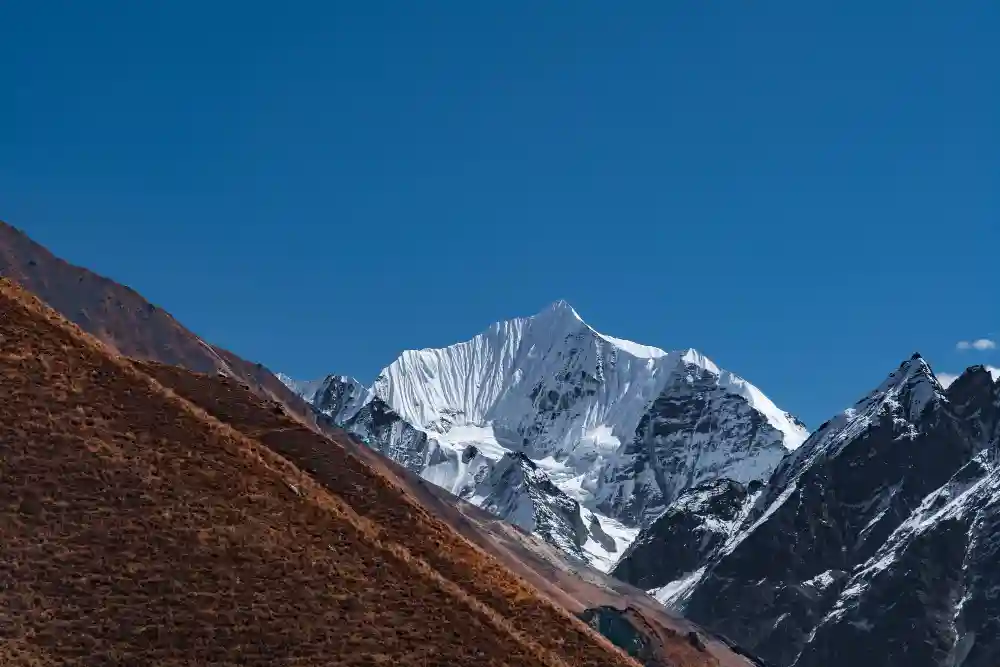
Langtang Valley Trek for-10 Days

Tour Info

trip code

E-029

Starting Point/ End Point

Kathmamdu

Accommodations

Lodge/ Tea House

Max Altitude

4610m/15120 fts

Duration

10 days

country

Nepal

Trip grade

Moderate

Activities

Trekking

Best Season

Spring (March–May) and Autumn (September–November)

Overview

Langtang Valley is located in Langtang National Park, and is a popular destination for visitors interested in the region's Tamang people, Buddhist practices, forests, and alpine meadows. The trail traverses through villages like Syabrubesi, Lama Hotel, Langtang Village and Kyanjin Gompa. Tea house accommodation or lodges, generally twin sharing rooms, will be available during the trek and provide basic but comfortable rooms with freshly prepared meals. The walk is fairly accessible to Kathmandu, has a sufficient number of high altitudes and cultural spots, moderate number of walking days in between travel and is a well balanced overall trek.

Highlights

  • Visit Langtang Valley, one of the nearest trekking areas to Kathmandu that you can reach before entering the Himalayas.
  • To go through Langtang National Park featuring forests, alpine scenery, and a variety of wildlife.
  • Take delightful walks along the Langtang River.
  • Stroll through the bamboo and oak woods and rhododendron and pine forests.
  • Visit traditional villages in the mountains and learn about the Tamang culture.
  • Do the following: go through the mani walls, the chortens, the prayer wheels, the prayer flags and the Buddhist monuments.
  • Explore Langtang Village and experience the lifestyle of the mountain.
  • Move up to the main point of the upper Langtang Valley – Kyanjin Gompa.
  • Take a tour of Kyanjin Gompa monastery and the local cheese factory.
  • Hike up to Kyanjin Ri to enjoy a panoramic view of the Langtang mountain range and the surrounding glaciers.
  • Spend a relaxing night at a one of the local tea houses or lodges.
  • Explore four cultural centres in Kathmandu Valley.
  • Enjoy a harmonious mix of culture, nature, mountain trekking and local hospitality.

Itinerary

Day 01: Arrival In Kathmandu, Nepal & Pre-trip meeting.

Our representative from Ever Nepal will be waiting at Tribhuvan International Airport to pick you and take you to your hotel by private vehicle. The initial point where most trekking trails start is the capital city of Nepal: Kathmandu. The remaining part of the day can be used for leisure after the flight or to visit the local area.

A pre-trip meeting to brief about Langtang Valley trek route, Langtang Valley trek schedule, accommodation, food and drink, permits required, safety issues and trekking details will be organised. The guide will also ensure that all necessary paperwork will be in order and questions will be answered regarding the trip. The rest of the trekking gear can be bought and rented in Kathmandu if necessary.

Overnight in Hotel, Kathmandu

Max Elevation: 1,350 meters

Travel Distance: Airport to hotel transfer; approximately 6 to 10 km

Travel Hours: Approximately 20–40 minutes

Accommodation: Comfortable hotel in Kathmandu

Meal: Dinner 

Day 02: A guided sightseeing tour of Kathmandu valley.

The day follows a guided sightseeing tour of the four important cultural and historical sites of Kathmandu Valley as per programme. The tour offers introduction about traditions and cultures of Nepal, its ancient architecture, religious traditions and history of Nepal. This is done by car with a guide.

Swayambhunath Stupa
Swayambhunath Stupa is regarded as a primeval and essential Buddhist monument in Nepal. It sits on a hill, west of Kathmandu, and due to the presence of numerous monkeys around the site it is also referred to as the Monkey Temple.

On all of the four sides of the main stupa, Buddha's eyes are painted, symbolizing awareness and wisdom. Also, widely spread are small stupas, shrines, prayer wheels, statues, and traditional Buddhist monuments in the complex. The site has a hill top elevation, offering views eastwards over the Kathmandu Valley. Swayambhunath is an important religious place, as well as Buddhist and Hindu visitors.

Pashupatinath Temple
Pashupatinath Temple is one of the most renowned Hindu temples in Nepal and the temple is dedicated to Lord Shiva.Situated beside the Bagmati River, Pashupatinath Temple is an important religious and cultural site for Hindus. 

The main temple is of pagoda style and is detailed with wooden carvings and gold plated roof. Smaller Shrines, statues, ashramas, and religious buildings, are also located in the more expansive area of the temple. The riverbanks are also the sites for Hindu funerals. Non-Hindus are not allowed in the main temple area but can observe the main temple and its surroundings from vantage points.

Boudhanath Stupa
Boudha stupa is one of the largest stupas in Nepal and one of the important centers of Tibetan Buddhism in Nepal. On top of a large white dome is a golden building with four eyes pointing outwards, these eyes represent Buddha's four watchfulness.On top of the large white dome is a golden building with four eyes pointing outward, these eyes symbolize Buddha's four watchfulness.

The area around the stupa has monasteries, prayer wheels, shops, cafés, and Tibetan Buddhist communities. Monks or locals and visitors walk around clockwise and spin prayer wheels, pray. A clear introduction to the traditions and daily religious activities in Kathmandu, from the Buddhist perspective.

Bhaktapur Durbar Square
Bhaktapur Durbar Square is a historic Palace Area, situated in the Old City of Bhaktapur. Various Malla period buildings, stone sculptures, royal courtyards as well as temples can be found in it. It is renowned for its exquisite wood and stone carvings and is a place of well preserved Newari architecture.

The locations of importance are the 55-Window Palace, Golden Gate, Vatsala Temple and a number of historic courtyards. Nearby at Nyatapola Temple, which is located in Kathmandu, is one of the tallest pagoda style traditional temples in Nepal. Local stores also specialize in pottery, handicrafts, textiles and traditional goods.

Once the sightseeing tour, the dinners are free for rest or exploring Thamel. There are restaurants, cafés, trekking shops, souvenir shops and various travel services here.

Overnight in Hotel, Kathmandu

Max Elevation: 1,450 meters (Swayambhunath Stupa)

Travel Distance: Approximately 35–45 km by private vehicle

Travel Hours: Approximately 6–8 hours, including sightseeing and travel

Accommodation: Comfortable hotel in Kathmandu

Meal: Breakfast and welcome  dinner 

Day 03: Drive from Kathmandu to Syabrubesi (1,504m)

The trek starts with a drive from Kathmandu to Syabrubesi, where the adventure of Langtang Valley Trek can begin. Leaving Kathmandu Valley, the road winds through hillside villages, terraced farmland, small towns, and parts of the Trishuli River Valley. The trek offers scenic vistas of the countryside of Nepal and the lower Himalayan region. Roadways can have segment widths of less than 12 feet and the length of the trip may vary due to traffic, weather, and roadway conditions. In good weather, parts of the Himalayas range of the Ganesh can be seen.

The small town of Syabrubesi offers tea houses, restaurants, shop and basic trekking facilities. There is an opportunity for rest and preparation during the evening before embarking on the trek. 

Overnight in Syabru Besi

Max Elevation: 1,504 meters/4,930 fts

Riding Distance: Approximately 122 km

Travel Hours: Approximately 7–9 hours

Accommodation: Tea house or lodge in Syabrubesi

Meal: Breakfast, Lunch, and Dinner

Hot Drinks: Tea, coffee, Hot water and Purified water

Day 04:Trek from Syabrubesi to Lama Hotel (2,470m)

Trekking starts in Syabrubesi. The track meanders across a suspension bridge and then goes along the Langtang river in the lowlands of Langtang National Park. This way passes through small settlements, farmer land, bamboo, oak and other local trees in the forest. There is some gradual ascent and sections are uphill. This river is also right on the path for the entire day. Various species of birds and animals inhabit the forest, although some, like the red panda, are not easily spotted.

Lama Hotel is a small trekking village with its various tea house. The accommodation is basic but comfortable, with simple rooms, shared facilities, warm meals, and a relaxed mountain atmosphere. 

Overnight in Lama Hotel

Max Elevation: 2,470 meters

Trekking Distance: Approximately 13.3 km

Trekking Hours: Approximately 4–5 hours

Accommodation: Basic but comfortable tea house or lodge

Meal: Breakfast, Lunch, and Dinner

Hot Drinks: Tea, Coffee, Hot water & Purified water 

Day 05:Trek from Lama Hotel to the Langtang village (3,430m)

Crossing the Langtang River the trail winds its way further up the mountain into woodlands. After being through the oak, pine and rhododendron, the trail arrives at Ghoda Tabela. It is equipped with a security check stop and some small lodges. The valley widens after Ghoda Tabela with more open landscape. Along the way you will encounter small settlements, mani walls, prayer wheels, chortens and prayer flags. There is an evidence of high Buddhist influence in the area through these cultural features.

Langtang Village is one of the principal villages in the valley, where the majority of people are of the Tamang community. The earthquake of 2015 profoundly impacted the village and reconstruction started. Local tea houses also offer facilities, comforts and warm foods for trekking. 

Overnight in Lantang Village 

Max Elevation: 3,430 meters

Travel Distance: Approximately 14.8 km

Travel Hours: Approximately 5–6 hours

Accommodation: Basic but comfortable tea house or lodge

Meals: Breakfast, Lunch, and Dinner

Drinks: Tea, coffee, hot water and Purified water

Day 06:Trek from Langtang village to Kyanjin Gompa (3,865m)

This trek into the upper valley will begin from Langtang Village.The trail passes through small villages, yak pastures, stone walls, open meadows, and traditional Buddhist sites. The trail transitions from deep forests to scattered tree-line areas with increasing elevation. The trek will feature large mani walls, prayer flags, water-powered prayer wheels, and even small religious structures. As you enter the valley, it becomes clearer what the views of the surrounding mountains are.

Upper Langtang valley's main settlement is Kyanjin Gompa. It possesses some of the tea houses, small cafés and deficient trekking facilities. The village itself is encircled by tall mountains, and offers an easy vantage point for acclimating and exploring the area.

Overnight in Kyanjin Gompa

Max Elevation: 3,865 meters

Travel Distance: Approximately 6.8 km

Travel Hours: Approximately 3–4 hours

Accommodation: Basic but comfortable tea house or lodge

Meals: Breakfast, Lunch, and Dinner

Drinks: Tea, coffee, hot water and Purified water

Day 7: Acclimatisation and Exploration at Kyanjin Gompa

This day is to acclimatize and to visit the upper part of the Langtang valley. Activities are dependent on weather, condition of the trail, and physical condition of group. The trek to Kyanjin Ri may include. The large panoramic view from the viewpoint of Langtang mountain range, glaciers, high valleys and surrounding peaks. It's an uphill stretch and completed at an appropriate speed due to the high elevation.

The day might also involve visiting the Cheese Factory in the vicinity and Kyanjin Gompa depending on the time available. Kyanjin Gompa is a significant Buddhist centre in the area, and the cheese factory is famous for its production of regional dairy products based on yaks and other mountain animals' milk. This evening is spent at the tea house in Kyanjin Gompa and time given to rest and prepare for the journey back.

  • Max Elevation: Approximately 4,773 meters (Kyanjin Ri)
  • Travel Distance: Approximately 5–7 km, depending on the selected hiking route
  • Travel Hours: Approximately 3–6 hours
  • Accommodation: Basic but comfortable tea house or lodge in Kyanjin Gompa
  • Meals: Breakfast, Lunch, and Dinner

Day 8: Trek from Kyanjin Gompa to Lama Hotel

The journey back down the Langtang Valley. Trek winds through Kyanjin's empty landscape before making its return to Langtang Village. The trail is then along the Langtang River and slowly passes through forest. Passage through the well-known villages, prayer walls, bridges and through parts of the valley explored first on the trek. The downhill hike will have less of an elevation gain but longer walking day, so it can still be physically challenging. Lama Hotel offers restful accommodation in a comfortable setting; warm food and tea house accommodation.

  • Max Elevation: 3,865 meters
  • Travel Distance: Approximately 21 km
  • Travel Hours: Approximately 6–7 hours
  • Accommodation: Basic but comfortable tea house or lodge
  • Meals: Breakfast, Lunch, and Dinner

Day 9: Trek from Lama Hotel to Syabrubesi

The day of trekking at the end leads down the Langtang River towards Syabrubesi. The path is through the bamboo and mixed forests, along with suspension bridges and along almost the same path as the start of the trek.
At lower elevations, the weather becomes warmer, and the surroundings become greener. Along the way are small hamlets and regional farms. Langtang Valley trekking continues to Syabrubesi where the trekking section ends. The evening will be spent in the local lodge, and time is allowed after the trek to relax.

  • Max Elevation: 2,470 meters
  • Travel Distance: Approximately 13.7 km
  • Travel Hours: Approximately 3–4 hours
  • Accommodation: Tea house or lodge in Syabrubesi
  • Meals: Breakfast, Lunch, and Dinner

Day 10: Drive from Syabrubesi to Kathmandu

From here, the trip continues by road to Kathmandu. The path traverses small towns, rural communities, farmland on terraced land and passes through river valleys into the Kathmandu Valley. Travel times may vary with use subject to traffic, weather and road conditions. On reaching Kathmandu, you will be driven to the hotel. For the rest of the day, enjoy ambling through town or relaxing, browsing the shops before heading to local restaurants and cafes.

  • Max Elevation: 1,350 meters
  • Travel Distance: Approximately 122 km
  • Travel Hours: Approximately 7–9 hours
  • Accommodation: Comfortable hotel in Kathmandu
  • Meals: Breakfast and Lunch

What's included

  • Airport pick up and drop off by private car or jeep.
  • Two nights' hotel lodging in Kathmandu with twin room and breakfast.Twin roomed hotel according to standard hotel rates for two nights accommodation in Kathmandu with breakfast.
  • Three meals will be provided each day on the trek: breakfast, lunch and dinner.
  • Riding Local buses from Kathmandu to Syabrubesi and return from Syabrubesi to Kathmandu.
  • Fresh fruits which are eaten after dinner on the trek.
  • Accommodation in local trekking lodge/tea house during the trekking.
  • Entry Permits and TIMS Card of Langtang National Park.
  • An English speaking, government-licensed, experienced trekking guide. The salary, meals, room and board, transportation, insurance and any other necessary costs are all covered.
  • Well-trained and experienced porters using appropriate safety gear. There are two trekkers per porter. This includes the porters salary, meals and accommodation at no cost to you, plus your insurance is covered.
  • First aid kit, basic medical supplies, carried by trekking team.
  • In case of emergency, a special rescue from a helicopter. Your travel insurance policy (subject to insurance coverage) will cover the cost of rescue.
  • Carrying a sleeping bag, down jacket, duffel bag and walking poles while on the trek. All these items will need to be returned at the conclusion of the trip.
  • All government taxes and government payments.
  • Successful completion of the trek, hopefully resulting in a trip achievement certificate.
  • An oxygen (pulse rate, oxygen saturation, heart rate) meter to check your pulse rate, oxygen saturation and heart rate twice a day on the trek. This allows the guide to be able to keep an eye on potential symptoms of “AMS” or Acute Mountain Sickness.
  • An assistant guide, for groups of 8 + participants.

What's excluded

  • Entry visa fee to Nepal (As applicable). Visa can be obtained on arrival at Tribhuvan International Airport. 
  • Personal travel/travel insurance and all medical insurance.
  • International airfare.
  • Any items that are purchased for personal use on the trek, such as alcoholic and non alcoholic beverages, tea, coffee, hot chocolate, bottles or mineral water, soups, and extra food and other beverages consumed at tea houses or en route is included in personal expenses.
  • Desserts and sweets, such as chocolate, cake, pie and purée.
  • Below are some tips for the guide, the porter and the driver. Tipping is welcome but not required.

Packing List

From lower forest region to high altitude trails above 4000 meters, Gosaikunda is an ideal choice for the people of this region. Weather conditions can vary rapidly—during the day, it can be warm; in the morning or evening, and at high elevations, it can be cold. While it does require packing light, there is enough to always have warm and waterproof clothing to adjust to conditions. Generally, a layering system, a comfortable trekking boot, a warm sleeping bag and essential personal gear is sufficient for the trek.

Clothing

  • Lightweight trekking shirts
  • Warm long-sleeve base layers
  • Fleece jacket or warm mid-layer
  • Down jacket for cold mornings and evenings
  • Waterproof and windproof jacket
  • Comfortable trekking trousers
  • Thermal leggings or warm pants
  • Lightweight clothes for sleeping
  • Warm beanie or woolen hat
  • Sun hat or cap
  • A few pairs of trekking underwear
  • Two to three pairs of warm trekking socks

Footwear

  • Comfortable and well-broken-in trekking boots
  • Lightweight sandals or slippers for the tea houses
  • Extra trekking socks

Hands and Sun Protection

  • Warm gloves
  • Waterproof gloves or outer gloves
  • UV-protection sunglasses
  • Sunscreen with SPF 30 or higher
  • Lip balm with sun protection

Bags and Trekking Equipment

  • Duffel bag for your main trekking gear
  • Small daypack for daily essentials
  • Rain cover for your backpack
  • Trekking poles
  • Reusable water bottles or a hydration bladder
  • Headlamp with extra batteries
  • Power bank and charging cable
  • Personal camera or phone

Sleeping Items

  • Warm sleeping bag suitable for cold mountain nights
  • Sleeping bag liner, if preferred
  • Small travel pillow, if needed

Toiletries and Personal Items

  • Toothbrush and toothpaste
  • Biodegradable soap or small travel soap
  • Quick-drying travel towel
  • Hand sanitizer
  • Wet wipes or tissues
  • Sunscreen and lip balm
  • Moisturizer for dry skin
  • Personal hygiene products
  • Small comb or hairbrush

Personal First-Aid Items

  • Personal medicines
  • Pain relief medicine
  • Blister plasters or bandages
  • Antiseptic cream
  • Rehydration salts
  • Medicine for stomach problems, if required
  • Any medicine recommended by your doctor

Important Documents

  • Passport
  • Nepal visa and required travel documents
  • Travel insurance details
  • Trekking permits, if provided separately
  • Passport-sized photos
  • Emergency contact information
  • Some cash in Nepali rupees for personal expenses

Optional Items

  • Lightweight camera
  • Small notebook and pen
  • Book or e-reader
  • Earplugs
  • Snacks or energy bars
  • Small dry bags for keeping clothes and electronics organised

Specific Items for Women

  • Comfortable moisture-wicking sports bras
  • Menstrual products suitable for the full trekking period
  • Small hygiene bags for carrying used products
  • Personal hygiene and skincare products
  • Hair ties or a lightweight headband

Frequently Asked Questions

How difficult is the Gosaikunda Lake Trek?

This trek to the Gosaikunda lake is considered a relatively moderate trek. The unique difficulties will be the steep uphill, the high elevation and the variable weather. The hike is completed comfortably with a walking pace for a good level of fitness and some preparation.

How many days does the Gosaikunda Lake Trek take?

The standard Gosaikunda Lake Trek is 5 to 7 days. Some longer routes offer an additional day or two to acclimatize or add an additional day to the route to join the trek to Langtang Valley or Helambu.

What is the highest point of the Gosaikunda Lake Trek?

Gosaikunda Lake lies at the height of around 4,380 meters above sea level. Several tracks have to pass through Laurebina La Pass at approximately 4610 m. The highest elevation varies according to the tour and trekking tracks.

What is the best time for the Gosaikunda Lake Trek?

Spring and Fall (March to May and September to November, respectively) are typical seasons. During these months, generally stable weather conditions, good visibility of the mountains and trekking weather. The winter cold nights can be very cold and the monsoon season could bring it rains, slippery paths, and not a lot of views.

Is there a risk of altitude sickness during the trek?

Of course, altitude sickness may occur as you are hiking on Gosaikunda lake which is located above 4th thousand meters. Headaches, nausea, dizziness, fatigue and sleep disturbances are common symptoms. The risk is reduced by walking slowly, if a guide is instructed, drinking plenty of water and following the guide's instructions.

What kind of accommodation is available during the trek?

Technology-assisted accommodation is primarily used in local tea houses and trekking lodges.Overall, accommodation is mostly technology-assisted, meaning local tea houses and trekking companies. The rooms are typically very plain and may share bathrooms and have very simple amenities. Food is served in the tea houses, and hot showers, battery-charging fees are possible at higher altitudes.

What should I pack for the Gosaikunda Lake Trek?

These include warm layers, down jacket, waterproof clothing, comfortable hiking boots, warm gloves, hat, and sunscreen, as well as a good sleeping bag. A small day pack, water bottles and trekking poles, along with any necessary medicines, are helpful items to pack. At higher elevations a change in weather conditions may be rapid, so appropriate warm and waterproof gear should be used.

User Review