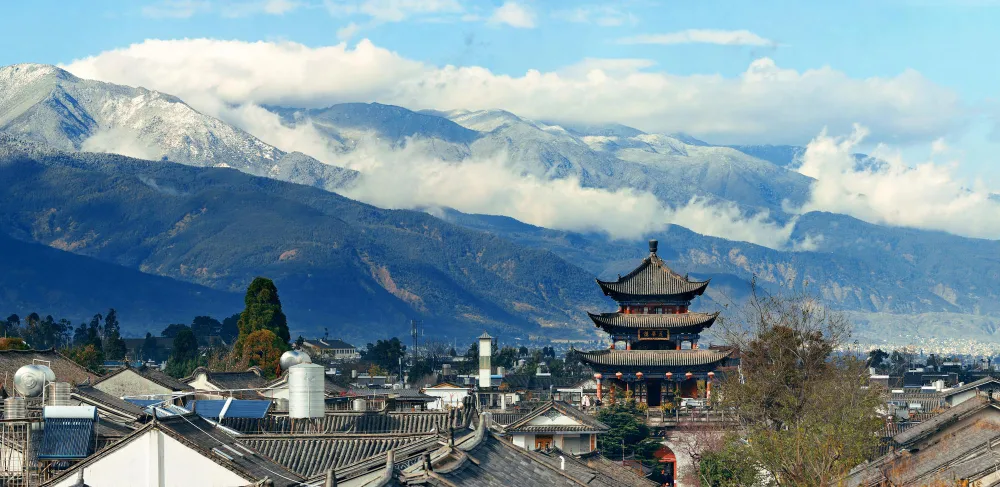
Tibet Cultural Tour - 7 Day

Tour Info

trip code

EN-037

Starting Point/ End Point

Kathmandu

Accommodations

Lodge/ Tea House

Max Altitude

5010m (Kora La Glacier)

Duration

7 days

country

Tibet

Trip grade

Moderate

Activities

City Tour

Best Season

April, May, June, September, October

Overview

A Tibet Cultural Tour for 7 days provides an insight into the spiritual and cultural aspects of Tibet. This tour highlights the ancient monasteries, holy structures, and Buddhist ideology that influence the lifestyle of the people. The prayer flags, paintings, and chanting symbolize peace and harmony. Customs, dresses, cuisine, and art of thangka painting and woodcarvings demonstrate the skills that have been passed down from generation to generation. The beautiful landscape of broad valleys and snow-capped mountains provides a serene and motivational environment. This tour enables you to acclimatize to the high altitude while experiencing the spiritual and cultural heritage of Tibet.

Details

A Tibet cultural Tour for 7 days provides a wonderful insight into the spiritual, cultural, and traditions of the Tibetans. The tour highlights the spiritual aspects of Tibet, such as its old monasteries, holy structures, and deep-rooted faith in Buddhism. While touring Tibet, you get to witness prayer flags, murals, and gentle chanting that symbolize the values of peace, respect, and harmony with nature.

The local culture is presented through their local dress, simple local cuisine, and local customs. Many historical palaces and temples reflect the religious and cultural heritage of Tibet. The skills of the experts in making the Thangka painting, wood carving, and textiles are also reflected. In Tibet, you can witness the valleys and snow-capped mountains that contribute to the creation of a peaceful and motivational environment.

This Tibet Cultural Tour takes a leisurely pace while ensuring comfort and acclimatization to the high altitude. The 7-day tour provides a thorough understanding of the culture, traditions, and spiritual significance of Tibet.
Highlights

  • Get the aerial sight of Mount Everest, Makalu, Cho Oyu, and the Yarlung Zangbo River during the flight from Kathmandu to Lhasa.
  • Explore Tsedang city, Yumbulagang palace, Trandruk monastery, and Samye monastery.
  • Enjoy the view of turquoise Yamdrok Lake and Karo La Glacier.
  • Visit Gyantse Dzong and Pelkor Chode monastery in Gyantse. 
  • Explore the Tashilhunpo Monastery in Xigaze. 
  • Visit the Potala Palace in Tibet, the Jokhang Temple (a sacred temple), Barkhor Street and Norbulingka Palace.
  • Explore Sera Monastery, Drepung Monastery, Ramoche Temple and Tibet Museum on the second excursion day.
  • Explore Gyantse Kumbum Stupa, Palcho Monastery, Shalu Monastery, and Nyang Chu Valley while witnessing the scenic drive from Gyantse to Xigaze. 
  • View Brahmaputra River, Kambala Pass, and Kumbum Stupa on the return journey to Lhasa from Xigaze.

Itinerary

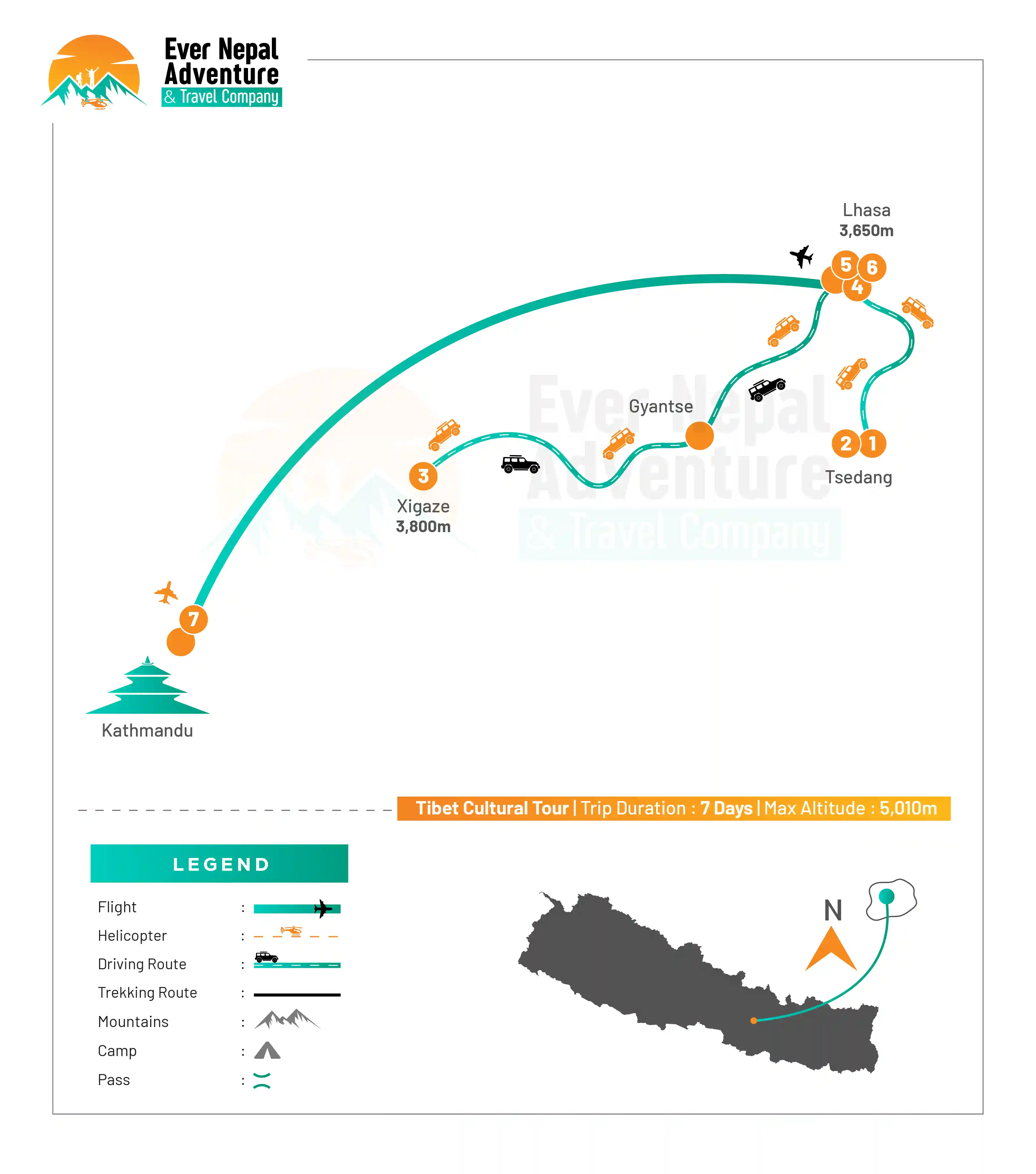
Day 1: Flight from Kathmandu (1,440 m) to Lhasa (3,650 m) and then drive to Tsedang

Your journey to the Tibet cultural Tour begins after you arrive at TIA (Tribhuvan International Airport). Upon arriving, you take a short rest and depart from here to Lhasa. You then take a scenic flight of around 1 hour and 20 minutes to reach Lhasa. While you are on a flight, you witness the winding Yarlung Zangbo River, beautiful landscape, and panoramic view of mountains such as Everest, Makalu, and Cho Oyu. While observing these views, you arrive at Lhasa - the entry point to Tibet. Upon arriving at Gonggar airport, you rest and head towards Tsedang through a picturesque drive. It takes around 1 hour, covering a distance of 104 km, to arrive at Tsedang. After that, you take some rest. In the evening, you are invited to a welcome dinner. After that, you spend the night at a comfortable hotel. 

  • Max Elevation: 3,650 meters (Lhasa)
  • Travel Distance: 104 kilometers
  • Travel Hours: 1 hour 
  • Flight time: 1 hour 20 minutes   
  • Accommodation: Hotel
  • Meals Included: Breakfast, Lunch and Dinner

Day 2: Full excursion/sightseeing tour in Tsedang

Day 2 is dedicated to visiting the nearby places of Tsedang. Your sightseeing tour commences after taking a delicious breakfast. You explore the major attractions of Tsedang city. The attractions include: 

  1. Yumbulakang Palace: Located in the Tsedang valley, this palace is believed to be the first palace in Tibetan history. Moreover, it was also a former residence of Tibet’s first king. From the top of this palace, you witness panoramic views of the Yarlung Valley, fields, rivers and mountains. 
  2. Tandruk Monastery: Situated near Tsedang, it is one of the oldest Buddhist monasteries in Tibet that is associated with the Nyingma sect. This monastery is famous for housing a sacred Thangka. 
  3. Samye Monastery: Located in Dranang County, this monastery is the first Buddhist monastery built in Tibet. It is designed in a mandala layout symbolizing the Buddhist universe. It plays a vital role in spreading Buddhism in Tibet.
    • Max Elevation: 3,550 meters (Tsedang)
    • Accommodation: Hotel
    • Meals Included: Breakfast, Lunch and Dinner

Day 3: Drive from Tsedang to Gyantse (3,950 m / 12,959 feet) and then to Xigaze (3,800 m / 12,467 feet)

Following a delicious breakfast, you continue your driving journey towards Xigatse in the early morning. You need to pass the Yamdrok Lake, Kora La glacier (4,660 m) and Gampala pass before reaching Gyantse, which leads to Xigaze. It takes around 6 hours, covering a distance of 319 km, to arrive at Gyantse. Upon reaching here, you explore Gyantse Dzong and Pelkor Chode monastery. After exploring these places, you take a scenic drive towards Xigatese, which takes around 1 hour and 30 minutes, covering a distance of 100 km. You take the typical Tibetan Countryside route to arrive at the Day 3 destination. While having a picturesque drive, you witness Gyantse Kumbum stupa, Palcho monastery, Shalu Monastery, Nyang Chu Valley, and snow-capped peaks. After an hour of driving, you arrive at Xigaze, where you eat a warm dinner before staying overnight. 

  • Max Elevation: 4,660 meters 
  • Travel Distance: 419 kilometers
  • Travel Hours: 7 hours 30 minutes 
  • Accommodation: Hotel
  • Meals Included: Breakfast, Lunch and Dinner

Day 4: Drive from Xigaze to Lhasa (3,650 m / 11,975 feet)

On this day, you return to Lhasa - the capital city of Tibet. After a hearty breakfast, you continue your driving journey towards Lhasa. It takes around 6 hours, covering a distance of 358 km, to arrive at the Day 4 destination. In the morning, you visit Tashilhunpo Monastery. Once you explore the monastery, you take a scenic drive where you witness turquoise Yamdrok Lake, Kambala pass, Nyang Chu valley, Brahmaputra river, Palcho monastery and Kumbum stupa. After a few hours of scenic drive, you arrive at Lhasa, where you are served with a leisurely dinner before spending the night at a comfortable hotel. 

  • Max Elevation: 3,650 meters 
  • Travel Distance: 358 kilometers
  • Travel Hours: 6 hours
  • Accommodation: Hotel
  • Meals Included: Breakfast, Lunch and Dinner

Day 5: First Excursion in Lhasa

In Lhasa, you spend two days exploring the nearby streets, temples, and other major attractions. Your sightseeing tour begins after you have a relaxing breakfast. On this day, you visit the landmarks and culture of Lhasa. You, along with your guide, go for the exploring attractions of Lhasa such as the Potala Palace, Jokhang Temple, Barkhor Street, and Norbulingka Palace. These attractions give you a very good insight into the history, religion, and culture of Tibet. After exploring, you return to your hotel, where you receive a delicious dinner before spending the night at a comfortable hotel. 

  • Max Elevation: 3,650 meters
  • Accommodation: Hotel
  • Meals Included: Breakfast, Lunch and Dinner

Day 6: Second Excursion in Lhasa

Your second day excursion commences after eating a leisurely breakfast. On day 6, you explore the monasteries and local life of Lhasa. You, along with your guide, explore the Sera monastery, Drepung monastery, Tibet traditional handicraft art center, Tibet museum, Ramoche temple, traditional tea houses and shops. By exploring these renowned sites, you can gain insights into Tibetan Buddhist traditions, monastic education, and the everyday lives of local people. After that, you return to your hotel, where you are served with a final warm dinner in Lhasa (China) before spending the night in a cozy room. 

  • Max Elevation: 3,650 meters
  • Accommodation: Hotel
  • Meals Included: Breakfast, Lunch and Dinner

Day 7: Flight from Lhasa to Kathmandu

Your journey concludes after arriving at the airport. After a leisurely breakfast, your driver and guides come to your hotel to pick you up and transfer you to Gonggar airport. Upon arriving there, we help you with the departure formalities and luggage check-in. After that, you take a scenic flight while observing the views of the Himalayan range, the Tibetan plateau, the Yarlung Zangbo river, and the lakes. After 1 hour and 25 minutes of flight, you arrive at Kathmandu, the capital city of Kathmandu. Upon reaching, you can explore the city and return to your home country.

  • Accommodation: Hotel
  • Meals Included: Breakfast, Lunch and Dinner.

Trek Route

Tibetan Cultural Tour Route

What's included

  • Fee for Tibet Visa
  • Service for picking up and dropping off at the airport.
  • Hotel lodging on a twin-sharing arrangement.
  • Daily morning meal.
  • Private transportation in a jeep or a van. 
  • Essential Tibet Travel permits.
  • Sightseeing and entrance charges according to the itinerary.
  • Experienced Tibetan guide who speaks English. 
  • All taxes imposed by the Government and local authorities.

What's excluded

  • All costs for international flights.
  • Any type of insurance.
  • Individual costs such as drinks, bottled water, and gratuities.
  • Environmental and political disturbance and unexpected events.

Packing List for Tibet Cultural Tour

Expect thin air, intense sunlight, and fluctuating temperatures, a Tibet Cultural Tour takes you through the high altitude terrain and ancient spiritual cities of the Tibet Autonomous Region. Whether you are exploring monasteries in Lhasa or visiting sacred lakes, carrying smart and layered essentials will help you stay comfortable throughout the journey.

Head and Face Protection

  • Warm woolen cap or beanie
  • Sun hat with wide brim
  • UV protection sunglasses
  • High SPF sunscreen
  • Lip balm
  • Neck buff or scarf
  • Lightweight headlamp
  • Face masks for dusty roads

Upper Body Clothing

  • Thermal base layers
  • Warm fleece jacket
  • Down jacket
  • Windproof outer shell
  • Long-sleeved cotton shirts
  • Quick-dry trekking t-shirts
  • Comfortable inner layers
  • Light waterproof jacket

Lower Body Clothing

  • Thermal leggings
  • Warm trekking pants
  • Comfortable casual trousers
  • Wind-resistant pants
  • Light trousers
  • Warm sleepwear

Footwear

  • Comfortable walking boots or trekking boots
  • Comfortable casual shoes
  • Socks made of wool or thermal fibers
  • Extra breathable sock
  • Lightweight slippers for hotels

Personal Toiletries

  • Toothbrush and toothpaste
  • Soap and face wash
  • Humidifiers for dry air
  • Hand sanitizer
  • Wet wipes and tissues
  • Quick-dry towel
  • Shampoo sachets
  • Toilet paper

Trekking and Travel Gear

  • Small day backpack
  • Big duffle or travel bag
  • Reusable water bottle
  • Water purification tablets
  • Power bank
  • Camera or smartphone
  • Charging cables
  • Universal travel adapter
  • Snacks and energy bars

Health and Safety Items

  • Basic first aid kit
  • Personal prescription medicines
  • Diamox for altitude sickness
  • Pain relievers
  • Antiseptic cream
  • Band-aids or blister treatment
  • Water for rehydration (ORS) keys
  • Medication for cold and flu

Optional Extras for Comfort

  • Neck pillow for long trips
  • Binoculars for mountain views
  • Notebook or travel diary
  • Lightweight blanket liner
  • Earplugs for peaceful sleep

Essentials for Female Travelers

It is advisable for women travelers to bring along a few additional personal care products as there is limited access in remote parts of Tibet.

  • Intimate hygiene wipes
  • Sports bra
  • Comfortable underwear
  • Skin moisturizers and sunscreen
  • Hair ties and clips
  • Warm Leggings for chilly evenings

Documents

It's important to document your journey to Tibet as it is a controlled territory and most journeys are arranged through a licensed travel operator.

  • Tibet Travel Permit: This is the most essential permit to get to Tibet Autonomous Area. It is issued by the Chinese authorities and can only be obtained by a Vietnam registered travel agency in Nepal or in Vietnam.
  • Chinese Group Visa: This is the most common entry visa for Tibet which is arranged by tour operators. Most tourists require a tourist visa which is typically not valid for entry into the Tibetan region and should be arranged with an approved agency.
  • Valid Passport: Passport should be valid for a minimum of 6 months. It should be submitted during the visa and permit application phase.
  • Passport-Sized Photographs: Carry recent passport photos as they are required for visa processing and permit documentation.
  • Travel Insurance: During Tibet Cultural Tour, travel insurance, with high altitude travel cover, medical and evacuation benefits is highly recommended.

Frequently Asked Questions

Is Tibet open for tourists all year?

Tibet is generally open for the tourists, however, access may differ by the political regulations and weather conditions. The majority of tours are held during the spring (April to October) and fall when there is less snow and a more predictable weather pattern that allows for easier travel and sightseeing.

Do I need a visa to visit Tibet?

Yes, but it's not possible to obtain a normal Chinese visa to travel to Tibet. Visitors must obtain a Tibet Travel Permit and group visa from a registered travel agency in order to enter through Nepal or China.

What is the best time to visit Tibet?

The best time to visit is from spring to autumn. April through October can be expected to have dry conditions, mild temperatures and good road access to visit the monasteries, lakes and high mountain culture areas.

Is altitude sickness common in Tibet?

Yes, altitude sickness is not rare as most places where you go, such as Lhasa, are above 3,500m. Rest and sufficient fluid intake are recommended as well as taking time to acclimatize the traveler to the environment to minimize symptoms.

Can I travel independently in Tibet?

No, you are not allowed to travel alone in Tibet. All foreign visitors will be required to travel in groups accompanied by an authorized tour operator who would provide them with the guide, vehicle, itinerary and all the required permits for the tour.

How long does a Tibet Cultural Tour take?

Most cultural tours range from 7 to 12 days and will vary depending on the tour itinerary. If the journey is longer, additional places of interest may be the sacred lakes or the places around Mount Kailash.

What kind of accommodation is available in Tibet?

Accommodations include simple guesthouses to more comfortable hotels in urban areas such as Lhasa. The facilities may be basic in the remote regions; however, these are always equipped with clean rooms, warm bedding and traditional Tibetan hospitality.

Is internet available during the tour?

Internet services are available in major cities like Lhasa, and may be weak or unavailable in remote areas. Few social media platforms may also not operate without VPN services.

What currency is used in Tibet?

The official currency is the Chinese Yuan (CNY). You can find ATMs in urban areas but it is advisable to have some cash in small shops and in remote areas where cards may not be accepted.

What makes Tibet culturally unique?

Tibet is known for its spiritual beliefs, ancient monasteries such as the Jokhang Temple, and iconic sites such as Potala Palace. It offers very good Buddhist culture, traditional lifestyle and the stupendous Himalayan landscapes.

User Review